Earlier in the year I was invited to spend the morning at The Thames River Police Museum in Wapping and was shown round by the very knowledgeable and welcoming curator, Rob Jeffries. I’ve always been fascinated by Wapping, its history, particularly in relation to the growth of the docks and warehouses, recent redevelopment and how this has impacted on the area. So I eagerly accepted Rob’s invitation to visit, and took the other half with me as well who had never been to Wapping. It made for a great day out for the two of us even though the weather was cold, windy and the clouds in the sky a dark steel grey. And, yes, a pub lunch was involved too.

I first started to visit the Wapping foreshore in 2017. I’d been mudlarking in both South West London and the City of London areas before then, but had never taken myself out further east (downstream) and realised it was time to do so. It’s always been important to me to broaden my knowledge of different mudlarking areas and what they might reveal archaeologically and historically re mudlarking artefacts.

Regarding the history of Wapping itself, I can only touch the surface in this blog as there is so much to write. It’s a fascinating area with a deep, rich, and sometimes violent history, as was much of London in centuries past. Now it’s a diverse and modern district with cafes, galleries and restaurants, though sometimes it worries me that the atmosphere can be a little bit bleak and empty when leaving the station, walking down the high street, and not seeing many people about, certainly during the week.

Wapping was first mentioned in the 13th century when it was little more than a tiny settlement on the river Thames. The first wharf was constructed in 1395 and the area began to grow quickly, becoming known as Wapping-on-the-Woze and eventually becoming an important port and maritime hub.
The area particularly flourished in the 19th century when the London Docks were built to the north and west of the high street. As docks and huge warehouses were constructed, the local population suffered as many of their houses were demolished to make way for the vast new builds. Squeezed between the very high walls of the docks and warehouses, Wapping could feel quite isolated at times, though the community welcomed the opening of Wapping Station in 1869 which helped them access other parts of the capital.

Wapping has always nurtured a diverse community with people from all round the world coming to live there over the centuries. In the 15th century, a community of seamen from the Low Countries (Belgium, The Netherlands and Luxembourg) began to arrive there and settle, followed in later years by a sizeable Irish population in the 16th century, while in 1702 a French speaking church was built and established at Milk Alley, many French speakers coming from Jersey and Guernsey to look for work. In the 18th century, Wapping also saw a sizeable increase in seamen of colour being baptised in the area and choosing to make their lives there. Many of these seamen may well have been originally enslaved, then given their freedom on becoming sailors, marrying and making a new life for themselves in Wapping. This is a particularly interesting area for research, and one I may come back to in the fullness of time, as it shows how 18th century British history constantly intersects with the slave trade on so many different levels.
German bombing during the second world war devastated the Wapping area as docks, warehouses, plus homes were destroyed and many lives lost. The area remained scarred and derelict for decades after, until the 1980s in fact, when the formation of the London Development Docklands Corporation, a government quango set up to redevelop the area when Margaret Thatcher was Prime Minister, brought many changes to Wapping. Not everyone welcomed the new redevelopment; residents who’d lived in the area for generations, as so often happens, felt priced out of the new luxury apartments and houses and voiced anxiety that the community would start to change around them as wealthy people moved in and older established families could no longer afford to live there. It’s difficult not to have sympathy with these views.
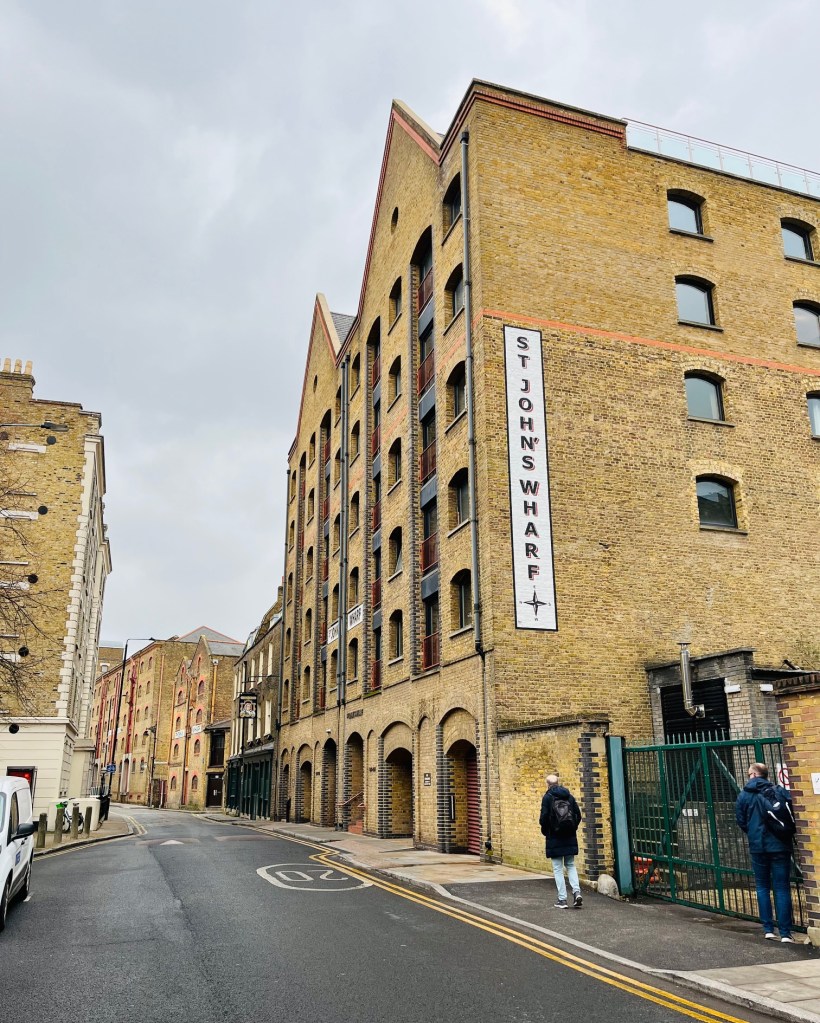
For all the sometimes empty atmosphere of some of the Wapping area, enough character remains from the old warehouses and foreshore to give visitors a sense of what it would have looked and felt like in centuries past. Sailors would be constantly arriving in boats and barges, bringing with them goods from all round the world, to enjoy some drunken time in the taverns, inns and brothels that lined the Thames Foreshore here. If you close your eyes, you can almost smell the scent of tea, coffee, spices, even gunpowder as it was brought in from ships lining the local docks.


There is so much more one can write about Wapping, but I must return to my visit to the Thames River Police Museum before I get carried away. (NB: for those who haven’t been here, but would like to visit, the museum is not open to the public. Visits are by appointment only and you will need to contact Robert Jeffries, the curator and retired ex-policeman, to arrange your trip.)
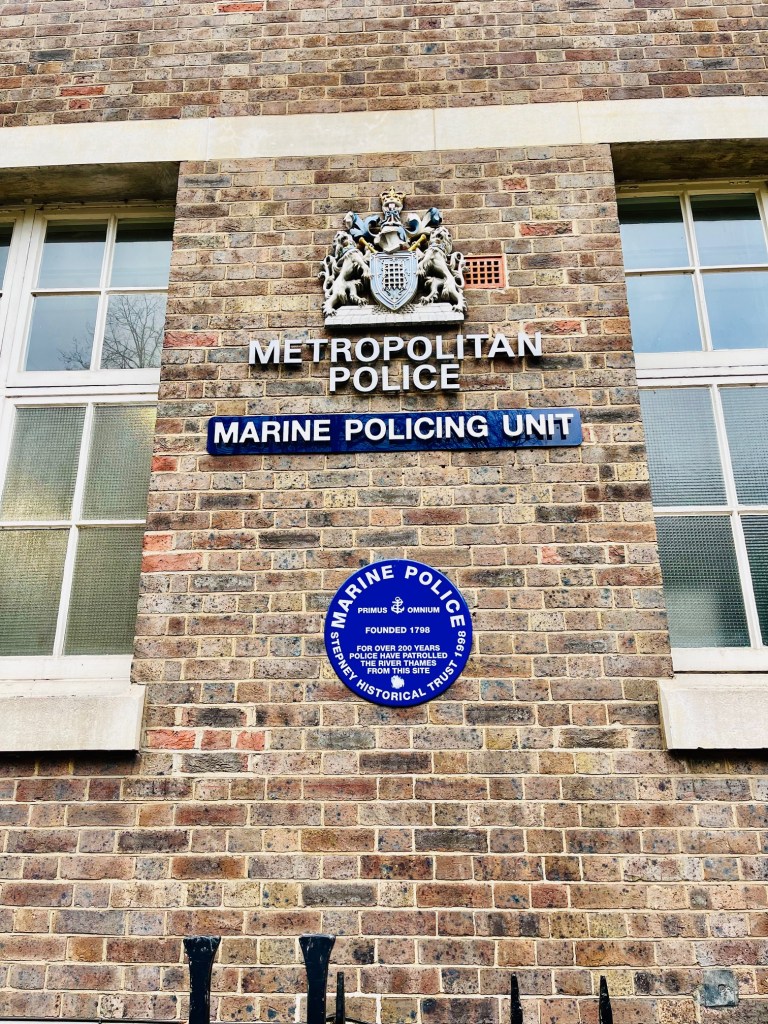
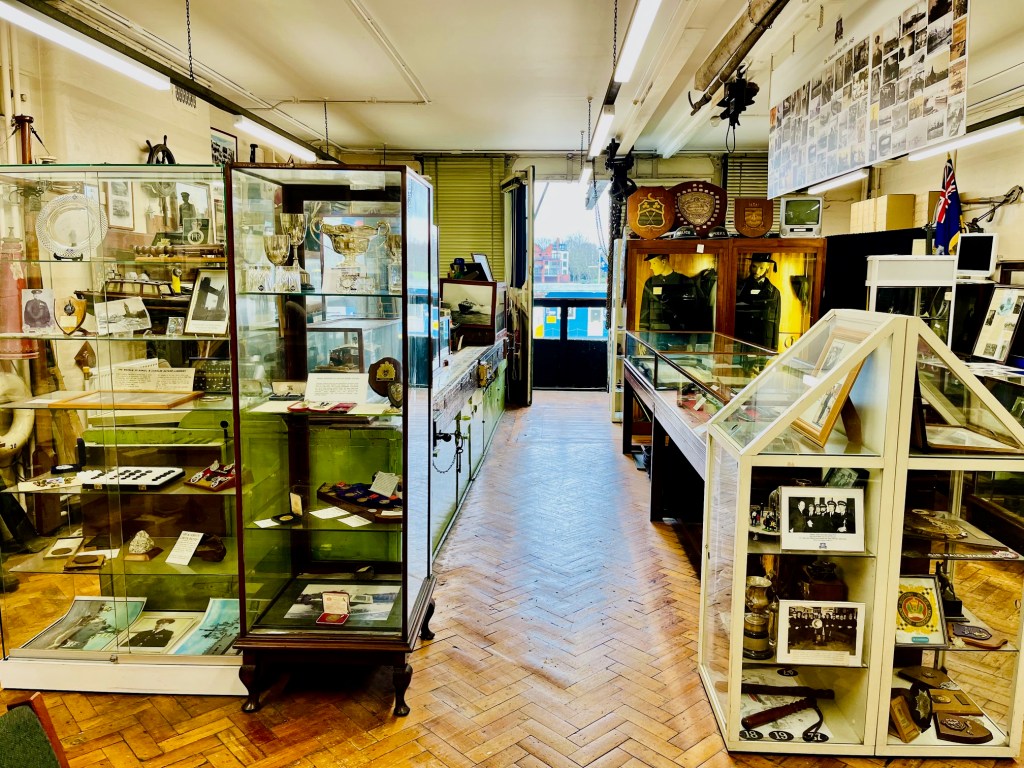
Housed in an old carpenter’s workshop, above and around it is Wapping Police Station, HQ of the Thames River Police, known as the Marine Policing Unit (MPU.)
In 1798, a newly formed body of police officers, a move initiated by Magistrate Patrick Colquhoun and Master Mariner John Harriott, brought much needed law and order to the Thames, riven as it was by all sorts of criminality that was spiralling out of control. Pressured and initially funded by the West India Company, who were losing huge sums of money because of the theft of goods from their boats and barges.
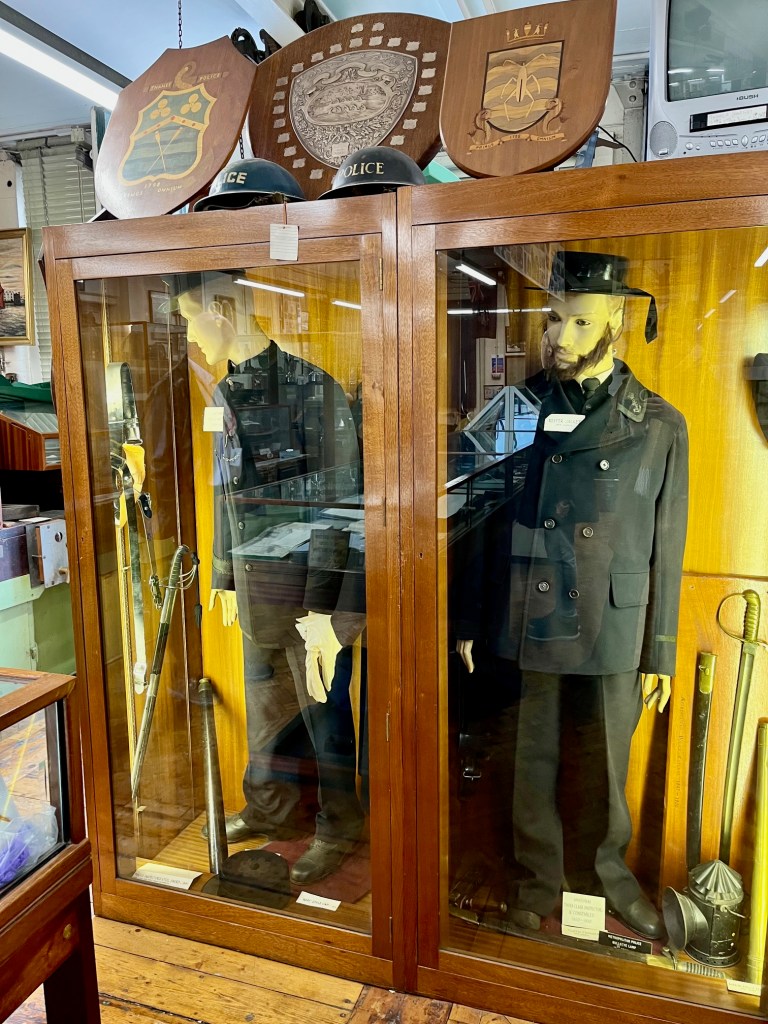
In those early days, the newly formed river police were largely taken from the Navy. Press-ganged sailors returning to London needed work and they possessed the three main requirements to police the river – they were handy with a firearm, sword and could row a boat.
Eventually absorbed into London’s Metropolitan Police in 1839, becoming Thames Division, today the Thames and all of London’s waterways are policed by the Marine Policing Unit (MPU) of the Metropolitan Police Service. Their role now is to save lives when people are in difficulty on the water, catch river criminals and work with Counter-Terrorism Units.


During the visit to the museum I learnt the names of master criminal gangs from the 17th and 18th centuries, prolific offenders, highly organised and who instilled terror in anyone who dared cross or challenge them.
Chief among these gangs were the highly feared Nighthorsemen, a sort of River Thames Mafia, who targeted goods on West India Company Ships, a lucrative and rewarding bit of thieving which the authorities wanted stopped as their losses were so great. The thieving focused on specific items that could be easily disposed of, eg sugar.
Also among the 17th century/18th century criminal gangs were the Lighthorsemen, Lumpers and Shufflehunters, who tended to focus on the theft of smaller items. I was intrigued by these names as I’d never heard of them and have resolved to find out more when time allows.
The museum also holds poignant original diaries detailing the work and many of the cases that involved the river police. I was very moved to read about the compassion shown over the retrieval of a newborn baby from the Thames (something that was sadly not uncommon in centuries past if the baby was stillborn or unwanted), and was then carefully taken to a mortuary for identification.

I also want to pay tribute to Ann Hunt, whose name I had never heard of until my visit to the Thames Police Museum, but who was the first serving female officer in the river police. Part of her uniform, including her hat (see photo below), is on display in the museum.
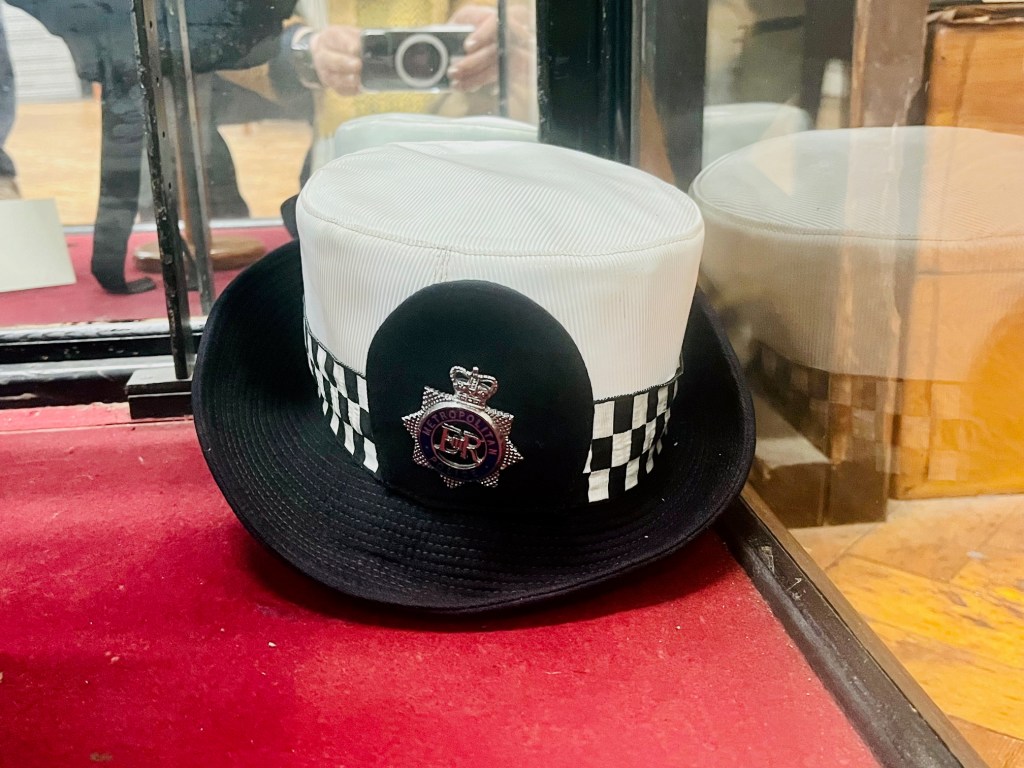
Ann’s training would have started with two years in the Met Police on land, before undertaking an intensive interview and selection process to join Thames Division.
It was fascinating to absorb so much from this small museum, sometimes larger museums can be overwhelming, but we left having learnt so many new things about London’s history regarding the river and thankful for the hugely important work the River Police do. Whenever I see one of their launches speeding along the Thames on their way to an incident I’m always full of gratitude for the work they and other professionals do (also the RNLI) to keep us safe on the river.
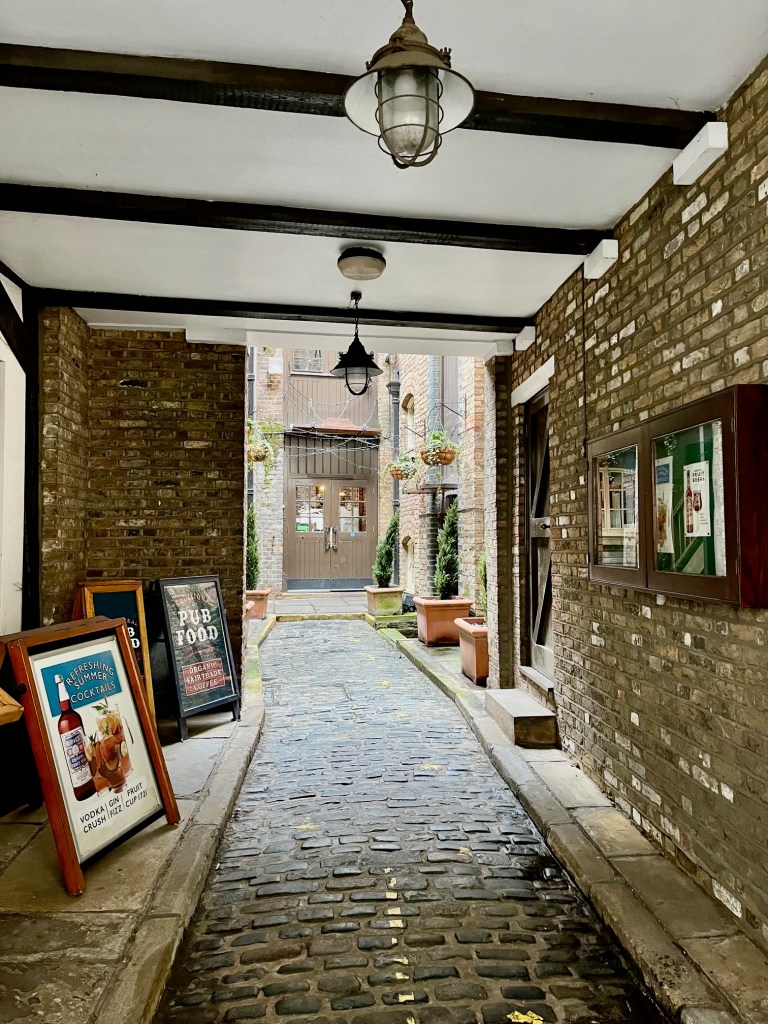
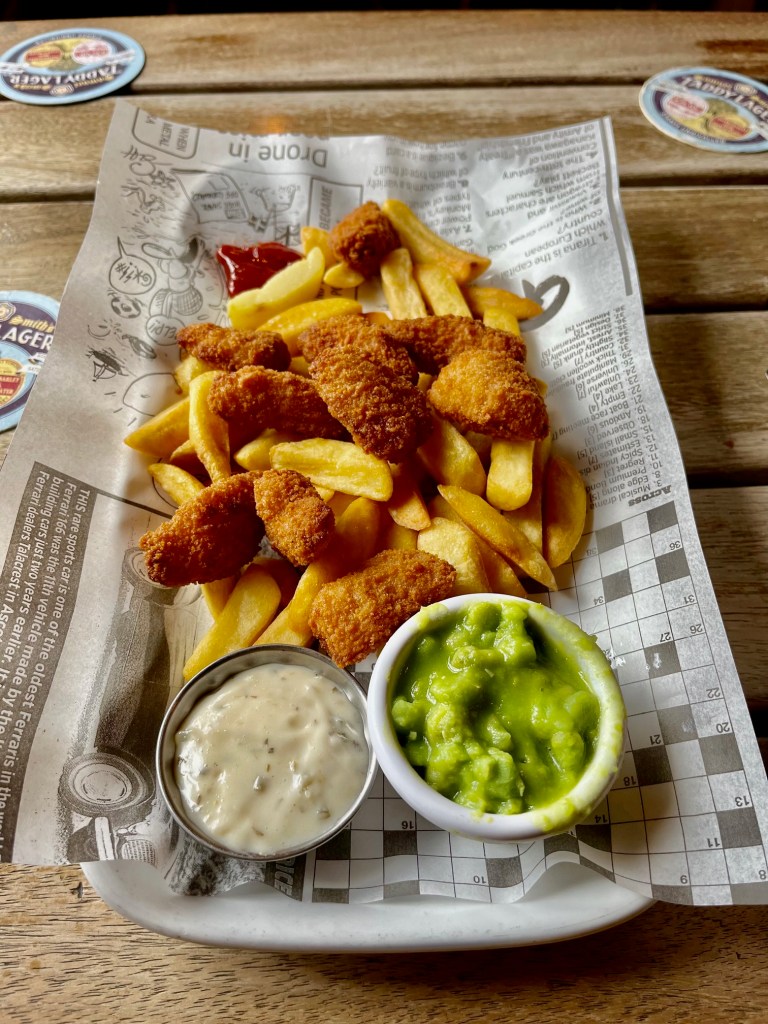
Of course doing touristy things leaves one hungry so we decamped to one of the many excellent Wapping pubs in the vicinity of the museum, choosing The Captain Kidd, 108 Wapping High Street for a scampi, chips and beer lunch. Highly recommended.
Last, but not least, I’d like to take the opportunity of thanking everyone who reads, messages me with their kind comments, or subscribes to my Thames Blogs and Burblings, and to wish you all a Merry Christmas and peaceful and happy New Year. I’ll be posting my next blog in the new year so this is the last one of 2023.
And if you’re looking for mudlarking or mudlarking-related books for yourself or as a gift for someone else this Christmas, then I heartily recommend the following excellent reads:
‘London In Fragments’ by Ted Sandling. The first modern mudlarking book I read and so beautifully written and illustrated. A really inspirational book.
‘London Clay: Journeys In The Deep City’ by Tom Chivers. This book is not about mudlarking as such, but rather full of stories that are a great mix of London’s geology, history, folklore and memoir. I learnt so much from Tom’s book.
‘Mudlark’d: Hidden Histories From The River Thames’ by Malcolm Russell. This book features the stories of forgotten people told through lost objects, revealed by changing tides. A welcome addition to books on mudlarking, Malcolm also reveals many previously unknown aspects of London’s history.
‘Mudlarks: Treasures From The Thames’ by Jason Sandy. A beautifully put together book featuring the stories of individual mudlarks and some of the incredible finds they’ve made over their years on the Thames Foreshore. One of the most stunningly illustrated books on mudlarking I’ve seen so far.
‘Mudlarking: Lost And Found On the River Thames’ by Lara Maiklem. A beautifully written book detailing how it feels to be a mudlark and our emotional connections to the river. Lara writes about what made her start mudlarking and the enjoyment and peace of mind she gets from being on the Thames Foreshore.
‘A Field Guide To Mudlarking’ by Lara Maiklem. A practical, useful and helpful guide to mudlarking, beachcombing, field walking etc and how to recognise finds.
‘The River’s Tale’ by Nathalie Cohen and Eliott Wragg. A really useful book focusing on the archaeology of the Thames Foreshore rather than finds, and what we learn about the river’s use in centuries past from the historic features found on the foreshore at low tide. This book adds a different dimension of knowledge for lovers of the River Thames and its archaeological past.
And on that note, leaving you with some of my Thames-found pins decorated in arty Christmas tree fashion. Have a good one!

 A Mudlark's Diary
I LOVE your reports on mudlarking. I live in Canada, and travel to the UK as often as I can. Reading your reports takes me back there to the breadth of UK’s history immediately. I thrive on this. Cheers to you from Canada! Brenda Turner
LikeLike
Thank you so much for your lovely comment, Brenda. You’re very kind. I hope next time you’re in the UK you can manage a trip to Wapping – I definitely think you’d enjoy it. Merry Christmas to you & your family. Best wishes, Liz
LikeLike