The annual Richmond Draw-Off is at an end for this year, and it’s been a spectacular one. The perfect note on which to end my final blog of 2025. It’s given me some fabulous finds, one in particular was very special, and allows me the indulgence of musing about lost and found jewels.
I’ve blogged about the Draw-Off before but, for those unfamiliar with it, it’s that time of year when the Port of London Authority (PLA) open Richmond Lock and Weir in order to carry out vital repairs. This results in some excellent low tides where, on occasion, it can look as though someone has pulled the plug on the Thames. This year’s Draw-Off has been longer than usual, beginning on Monday October 27th and ending on Friday 19th December.
The photo below, taken this year on the first day of the Draw-Off, Monday 27th October, gives a real sense of how low the tide has been and how much of the foreshore was tantalisingly visible, making the prospect of finds very intriguing. The foreshore here is hidden for the rest of the year so it’s a very special feeling to be able to step down ancient (and rather slippery) river stairs and search for artefacts.
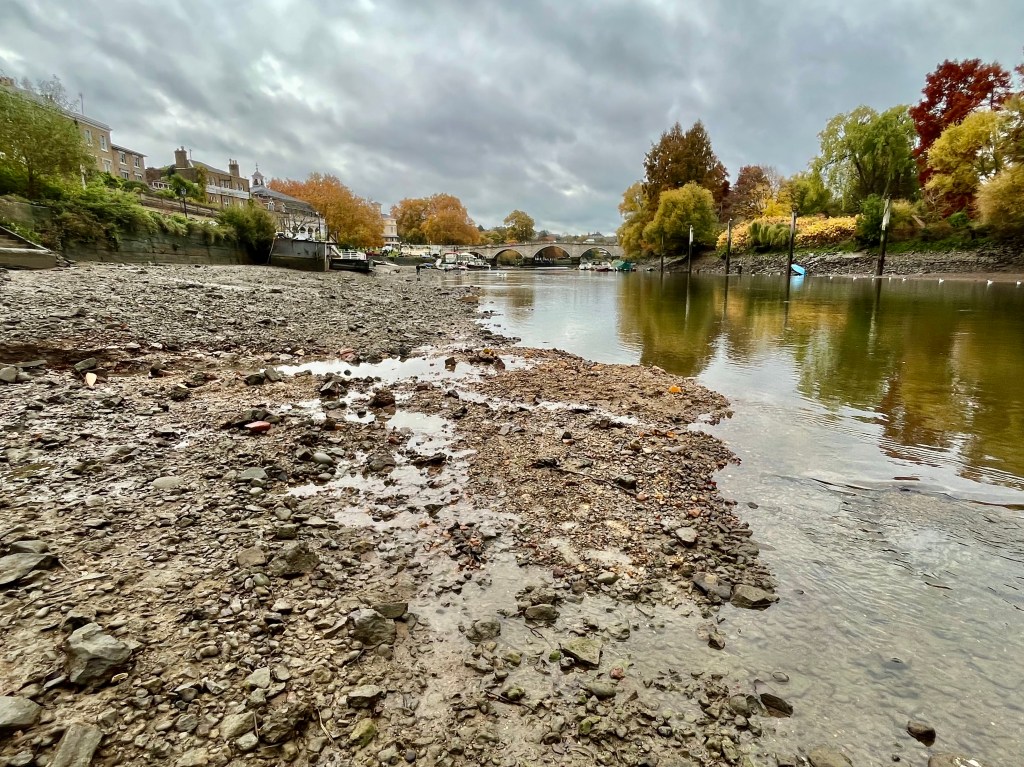
For those readers unfamiliar with this part of South West London, the London Borough of Richmond-upon-Thames is well worth visiting for its green spaces (home to Richmond Park, London’s largest deer park), scenic riverside walks and rich history. It’s the home of the long lost Richmond Palace, a stunning Tudor royal residence rebuilt and renamed by Henry VII in 1497-1501 on the site of the old Shene Palace, partially destroyed by a distraught Richard II in 1395 after the death of his wife Anne of Bohemia.
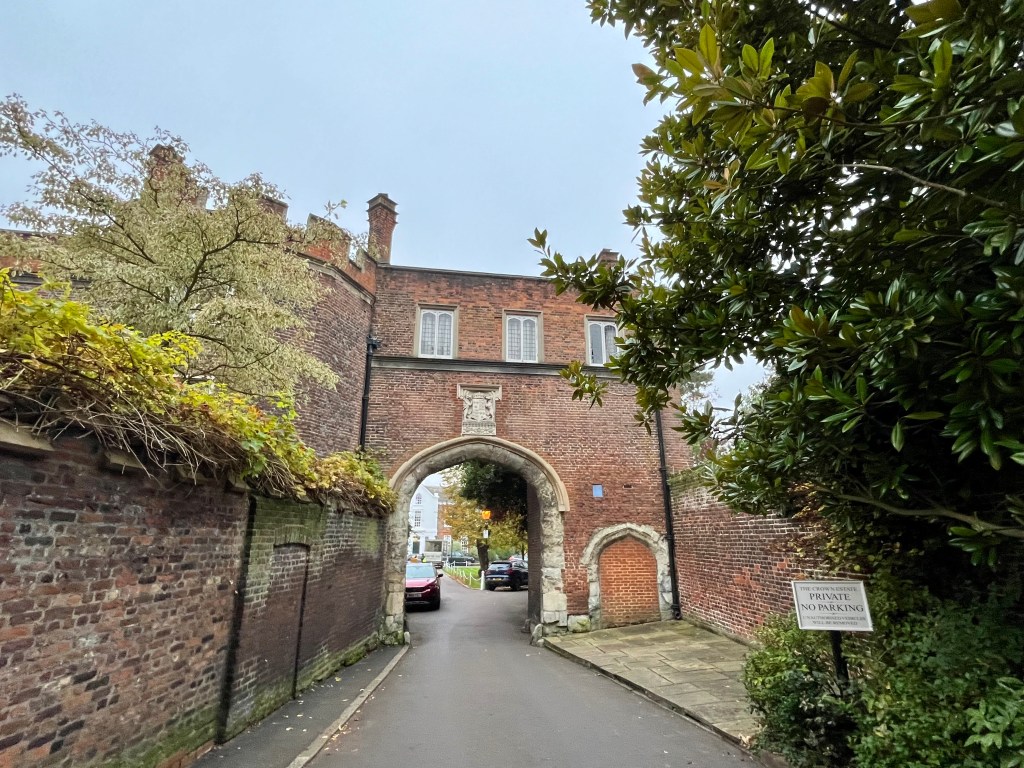
Only The Gatehouse and parts of The Wardrobe remain of the palace, though there is also surviving archaeology on the Thames Foreshore in the form of timbers from a jetty, carbon-dated to the late Tudor/early Stuart period. (Both The Gatehouse and jetty timbers are pictured below.) We also have surviving household accounts from Elizabeth I’s time here. Richmond Palace was thought to be one of her favourite homes and where she died on 24th March 1603. The Queen particularly enjoyed spending Christmas at Richmond, entertained by William Shakespeare’s acting company, the Lord Chamberlain’s Men, who performed for her and favoured members of the Royal Court.
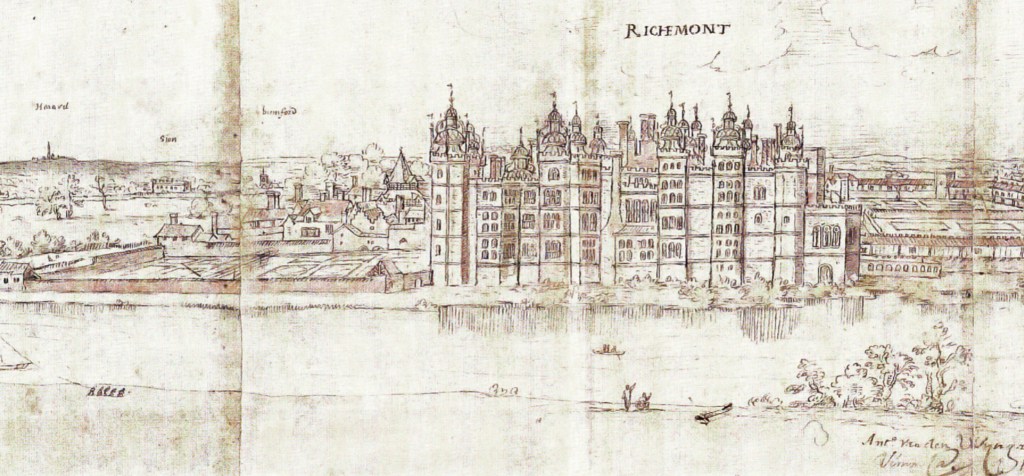
Sadly, contemporary images of the Tudor Richmond Palace are few and far between. The best visual view we have is Antonis Van der Wyngaerde’s sketch from 1562 showing its magnificent riverfront, complete with pepperpot turrets and gardens, drawn from the north (Middlesex) side of the river at what is now St Margaret’s. After Charles I’s execution in 1649, Oliver Cromwell ordered Parliament to assess the cost of demolishing the buildings and it was sold for £13,000, the stones re-used elsewhere. Eventually returned to Charles II following the Restoration of the Monarchy in 1660, by then the cost of rebuilding was too great and what remained of the ruined Richmond Palace was left to fall apart.
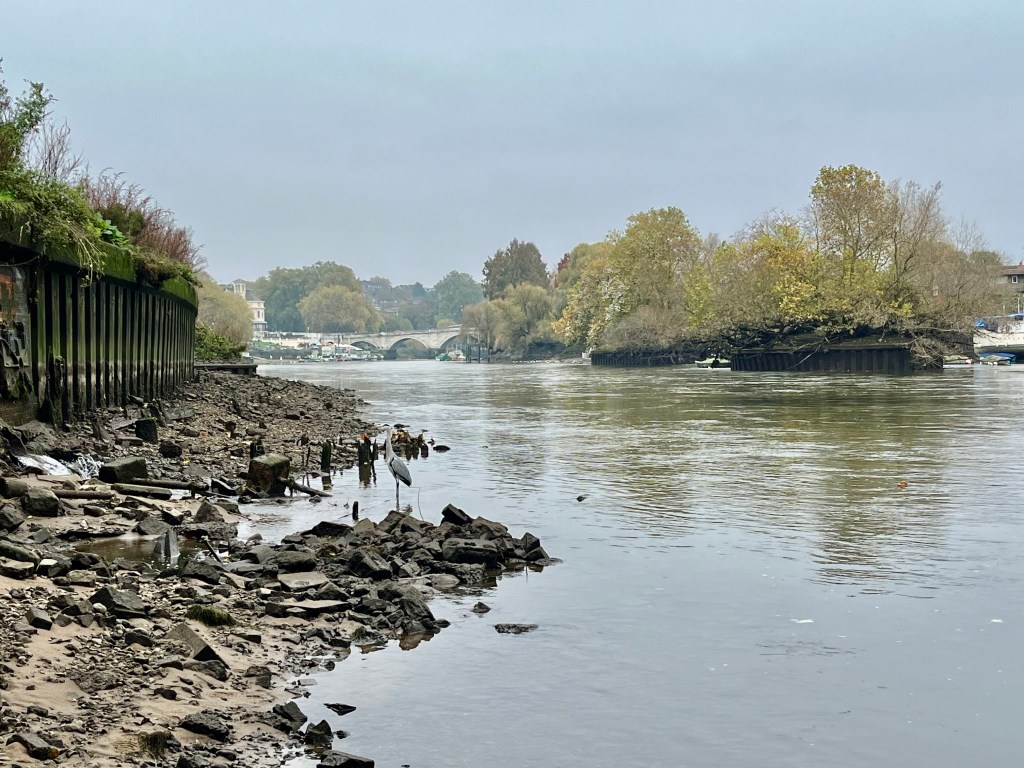
It was in the vicinity of the Tudor/Stuart jetty that I spotted one of the prettiest artefacts I’ve ever discovered on the Thames Foreshore. I’ve never found anything quite like this and it opened the door to a story that began in Central Europe in 1845 before somehow ending up in the river at genteel Richmond when I spotted a glint of something gold and tantalising in the water during this year’s Draw-Off.
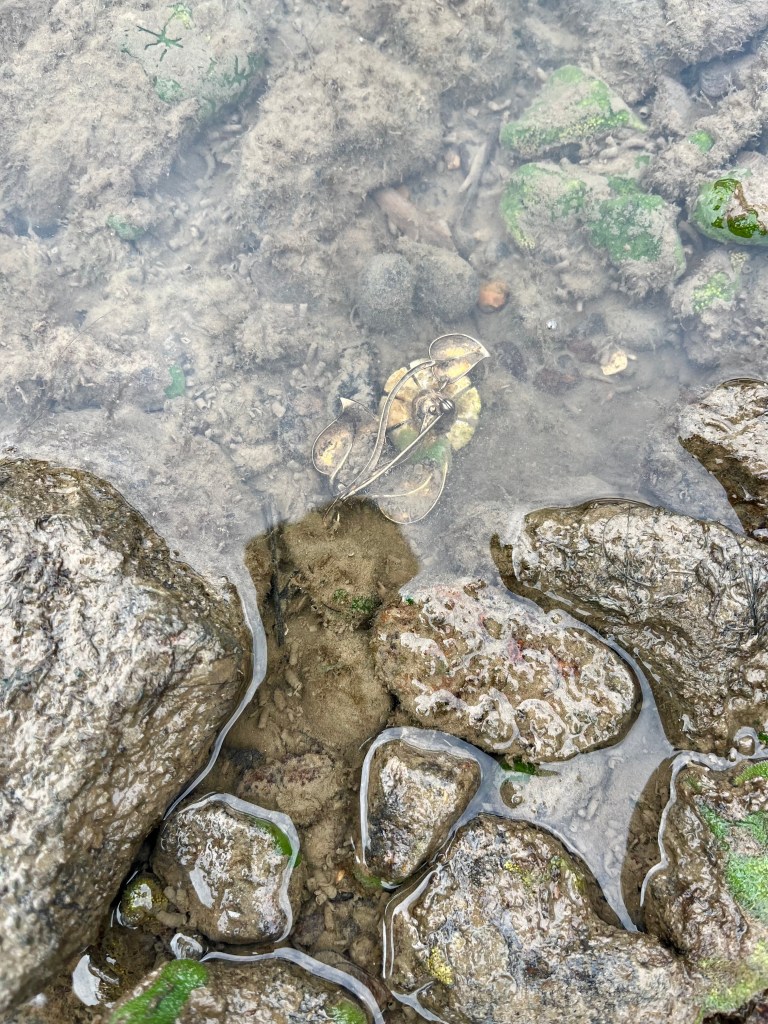
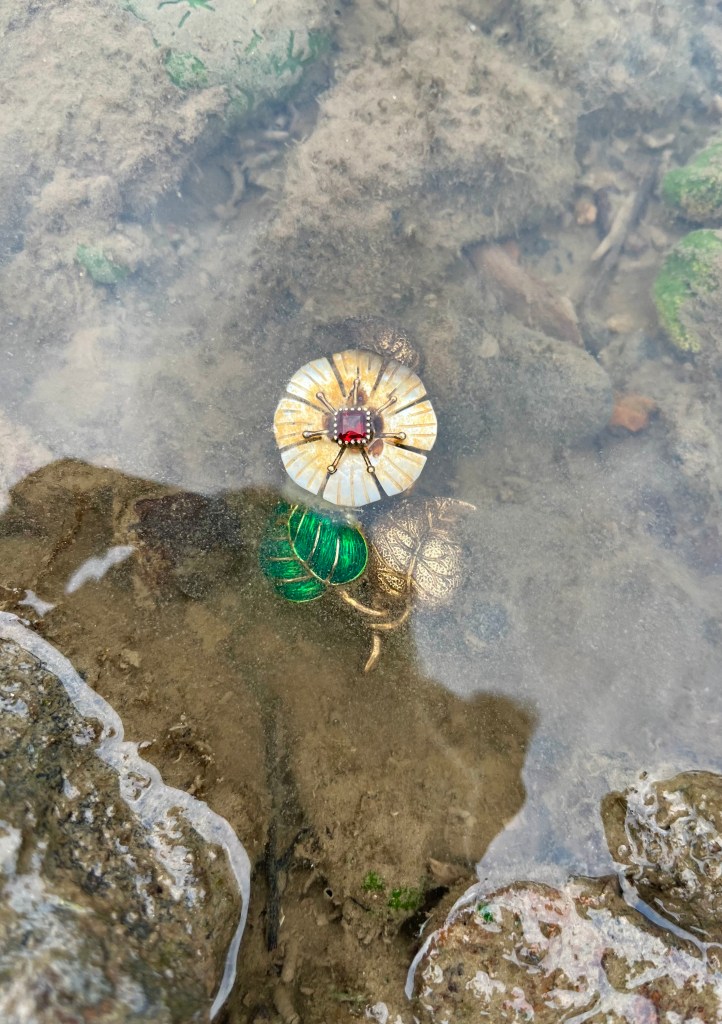
I knew I’d found something interesting and unexpected but wasn’t sure, at that stage, exactly what. A brooch of some sort, obviously, but clearly beautifully made to a very high standard using what appeared to me to be precious metals and semi-precious stones. It was also complete and undamaged, with a pin at the back. Taking it out of the river I gently removed a number of freshwater shrimps who’d made this their home over the decades, and re-housed them elsewhere in the water. There was quite a bit of mud in the nooks and crevices at the back of the brooch indicating this had been in the Thames for some time.
After a gentle clean-up at home, research into the brooch began in earnest. My trusty magnifying glass revealed a series of hallmarks – 925 UPM MMA – the 925 indicating gold-plated sterling silver. The other materials were mother of pearl, green enamel and garnet. Further research revealed that UPM stood for The Museum of Decorative Arts in Prague, and MMA for the Metropolitan Museum of Art in New York. This was very exciting and I immediately emailed the museum in Prague to see if they could help shed more light on the jewel.
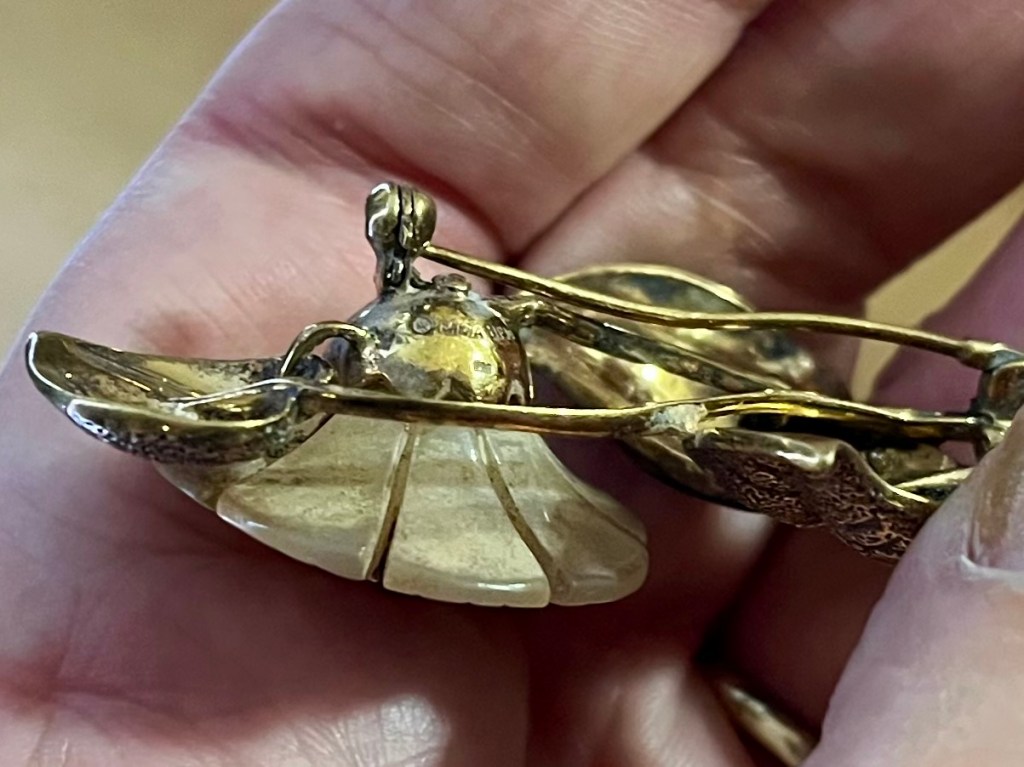
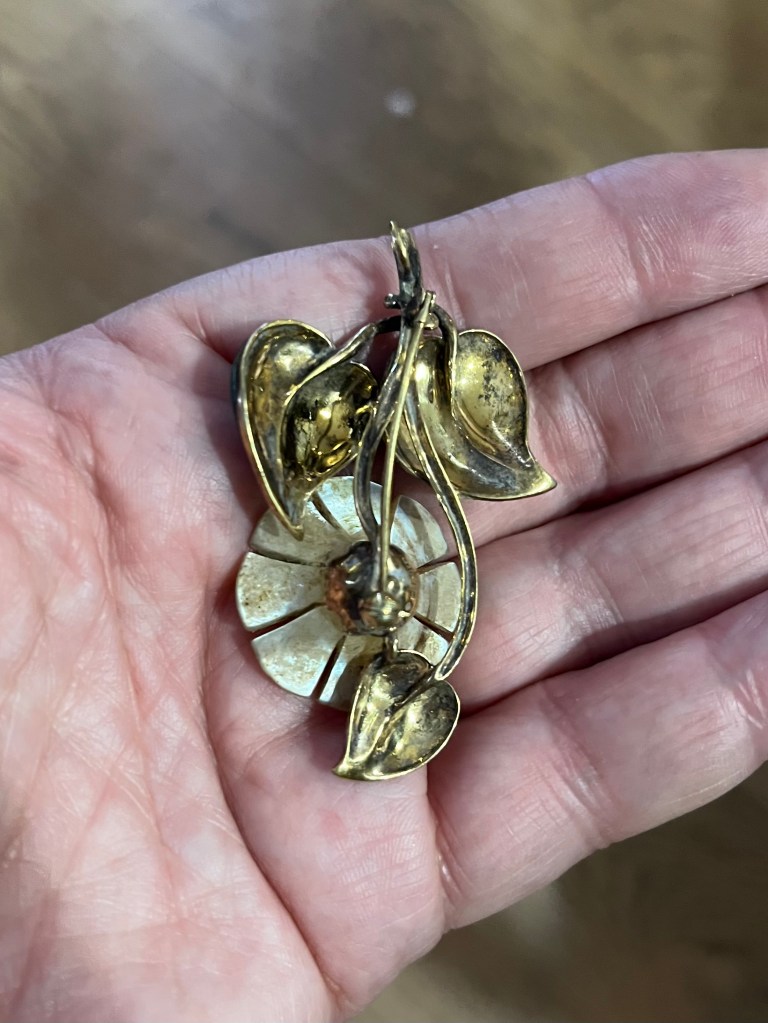
I was immensely grateful to the prompt reply from the team at The Museum of Decorative Arts in Prague who were extremely helpful and were able to provide me with information that helped colour in the backstory of my Thames find. I am particularly grateful to Dr Lucie Vlčková, who I contacted first and then signposted me to Dr Petja Matějovič, who provided so much helpful detail. I’m also grateful to Veronika Mědílková who, for the purposes of this blog, organised permission for me to use the museum’s images of the original necklace my found brooch was reproduced from.
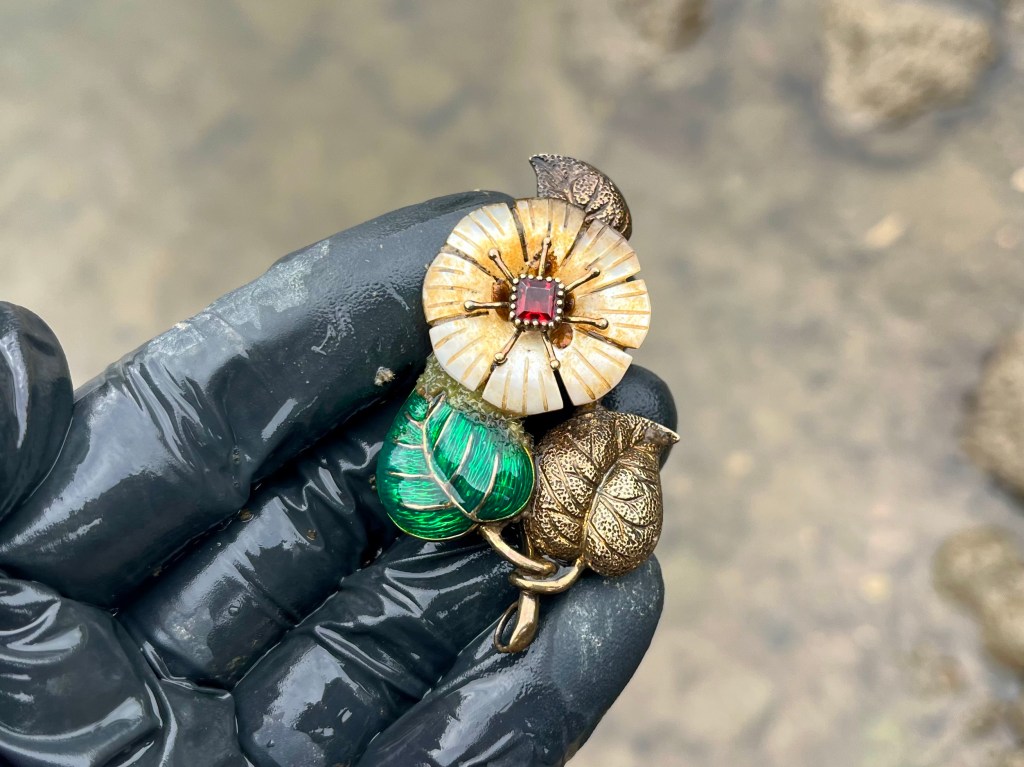
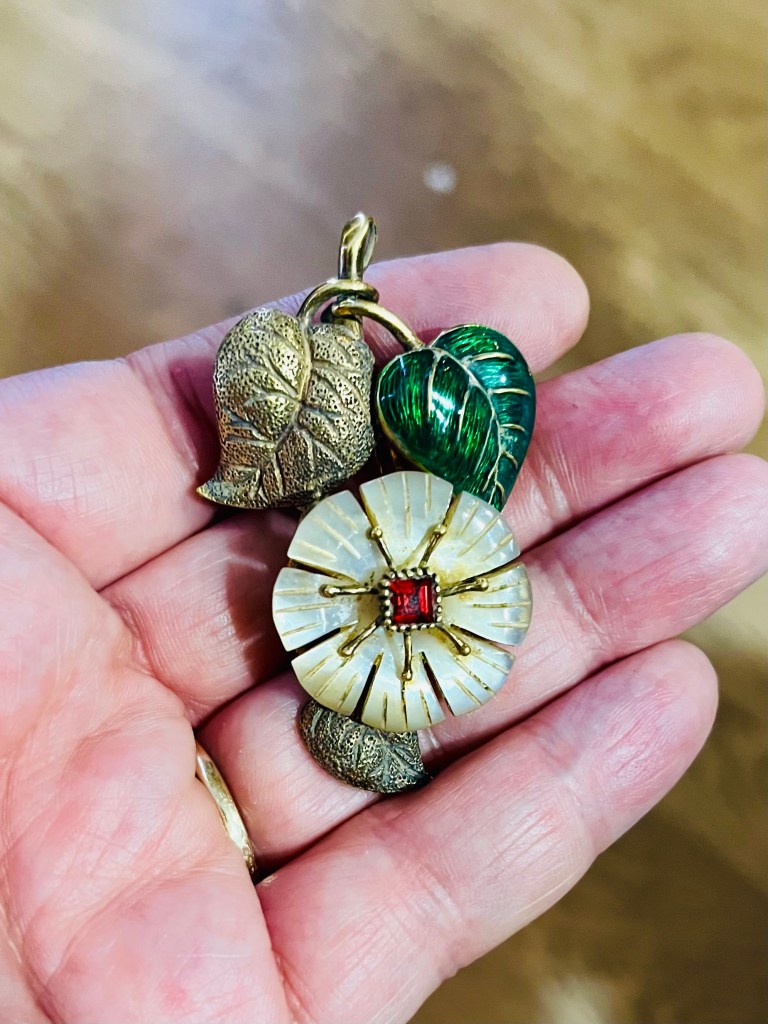
In 2000, the Museum of Decorative Arts in Prague collaborated with the Metropolitan Museum of Art in New York, allowing MMA to reproduce a limited edition collection of copies of approved artefacts. The reproductions, if this brooch is anything to go by, were beautifully made and used semi-precious materials. My find from the Thames at Richmond is one of these reproduced items.
Dr Matějovič kindly sent me images from the original necklace that my brooch was reproduced from. The original necklace is now part of the collection of the Museum of Decorative Arts in Prague and was originally made in Central Europe c 1845. This necklace was fashioned from gold, silver, ivory, pearl, enamel and rubies. Common to this style, parts could be separated and worn as a brooch. It would have been commissioned for a high status and wealthy woman.
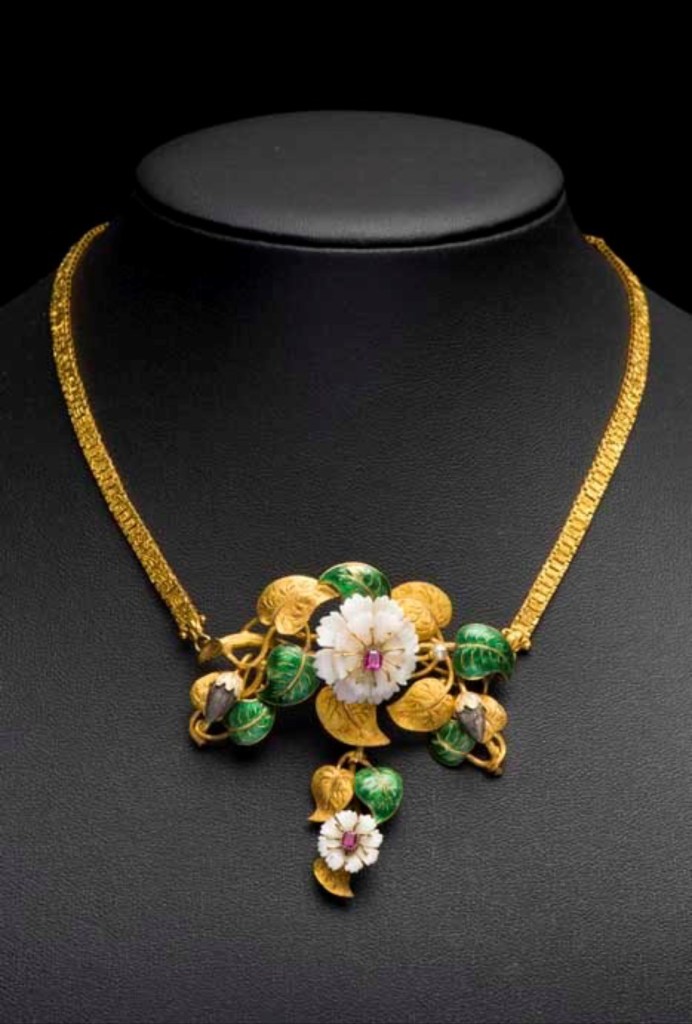
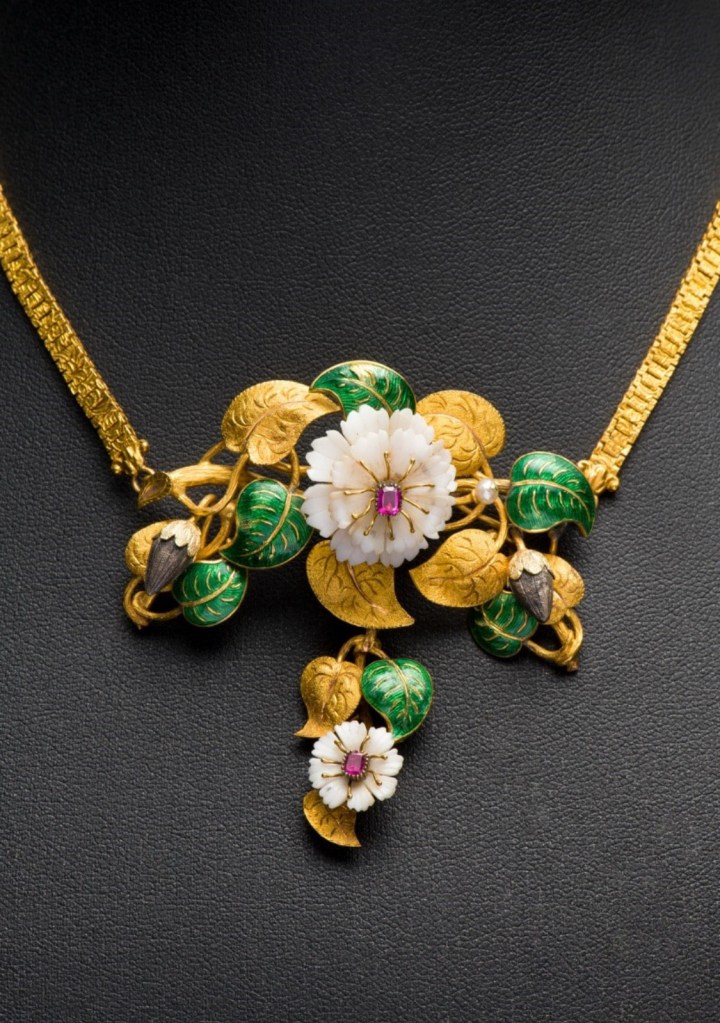
The original necklace, like so many beautiful things, would have been vulnerable during the Nazi occupation of Europe. It’s thought that it remained in private ownership and was eventually confiscated by Czech authorities after 1945 before transferring to the UPM in Prague in 1961. It has been on display here as part of an exhibition called ‘ART, LIFE.’ Dr Matějovič describes the necklace as a time capsule, symbolic of several stages of the life cycle of a plant. You can see this clearly in the way golden tendrils weave together the gold and enamel leaves, bejewelled flowers and seed pods.
The necklace also features in Dr Matějovič’s book ‘Jewellery -Form-Content’, bringing together jewellery past and present: jewellery still worn today, and jewellery that has not survived.

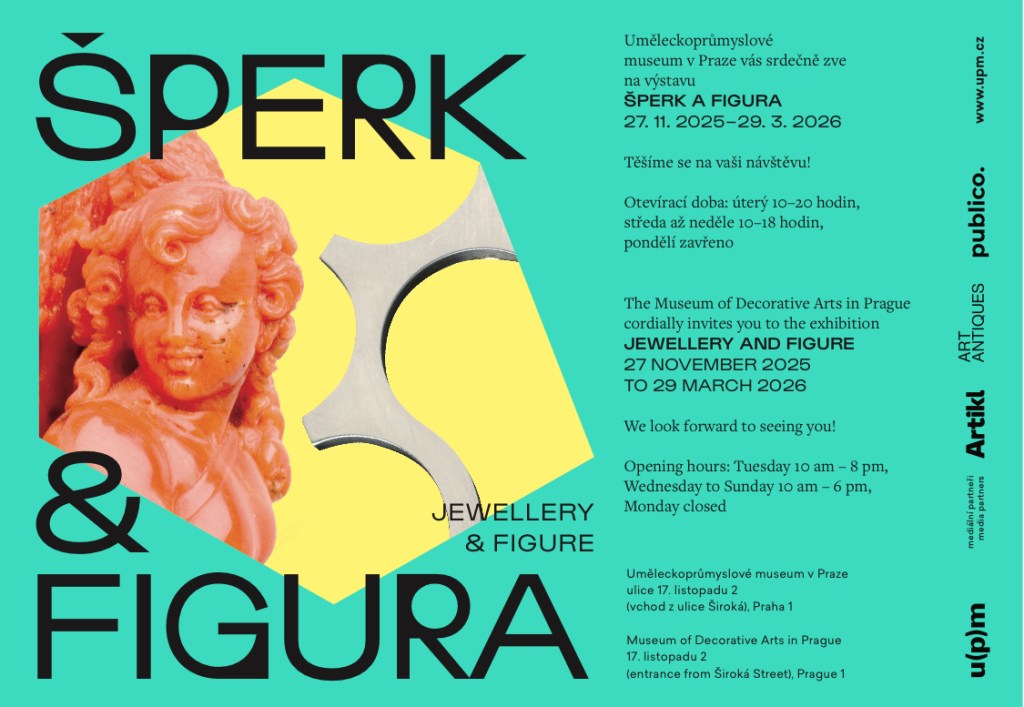
I have kindly been invited by Dr Matějovič to visit the Decorative Museum of Arts in Prague for their new exhibition ‘Jewellery and Figure’, which will be open until 29th March 2026, and hope to make the trip to Czechia sometime in the new year. A great start to 2026 and a wonderful experience to look forward to. I have included a link to the museum for more information about location and opening times:
Finally, thank you to Angela (@up_for_a_lark on Instagram, please give her a follow) who was with me when I found this stunning brooch and was able to share the moment of discovery with me.
As the tide began to come back in and I set off for home I couldn’t help thinking that Elizabeth I would have approved of this find, made within the vicinity of her long lost Tudor Palace, albeit separated by a span of over four hundred years since she last spent time here. I’ll never know how this artefact got into the river, one can only speculate; it was lost, then found again. This is what mudlarks do – we find lost things and bring them and their stories into the light again.
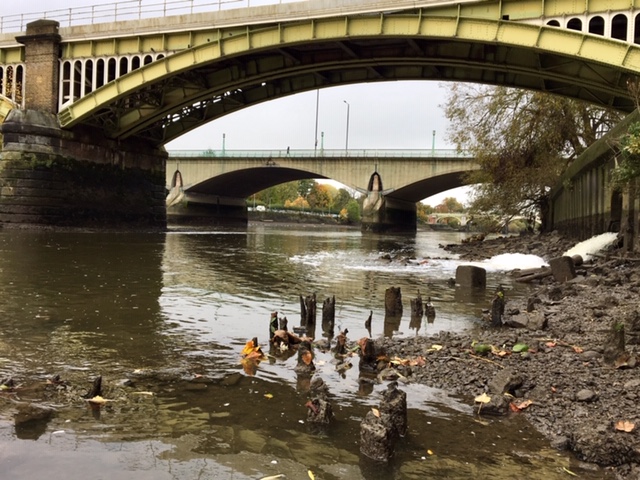
The timbers of the Tudor/Stuart jetty where I found my brooch, are heavily symbolic regarding other historic jewellery. As mentioned above, Richmond Palace was reputed to be the favourite home of Elizabeth I and the place where she died on 24th March 1603.
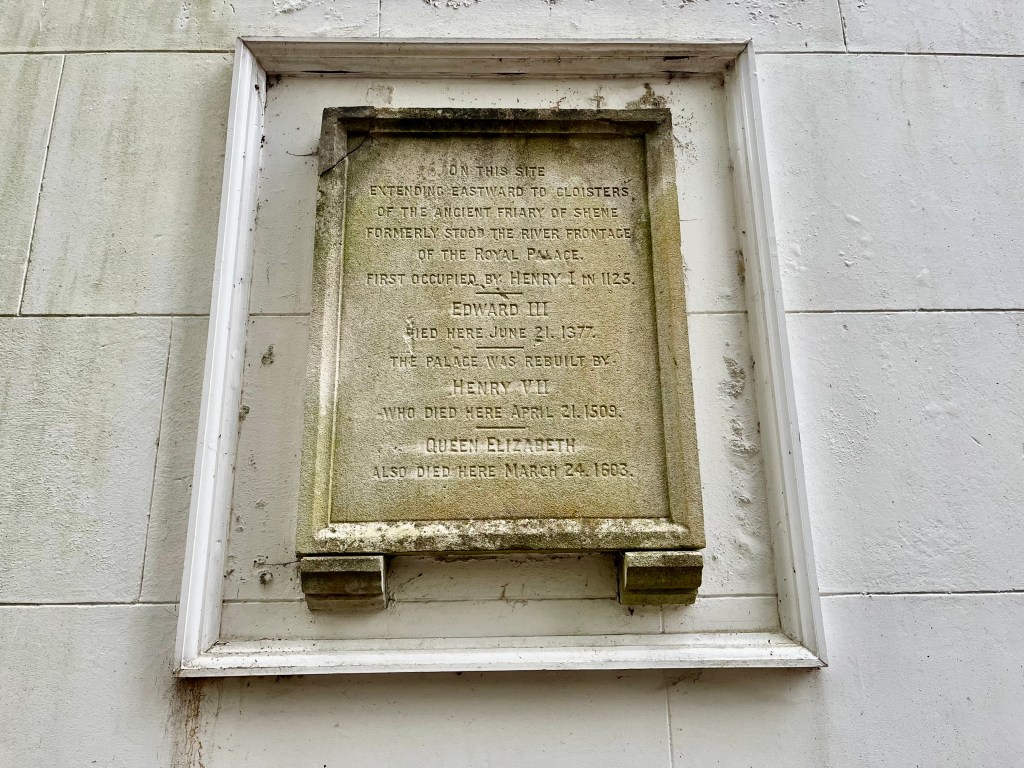
When mudlarking near the jetty I often think of the moment of the Queen’s death. According to legend, Robert Carey is said to have taken the Queen’s ring from her finger after she was pronounced dead. He then rushed to a boat, perhaps tethered at this very spot (travelling by road at that time was considered dangerous, the river was viewed as a much safer option) before being rowed down the Thames into the centre of London. He then disembarked and galloped at speed on horseback to James VI of Scotland, now James I of England. Elizabeth had died unmarried and childless, so James was named as her rightful heir (his credentials as the next Monarch were that he was the son of Mary, Queen of Scots, Elizabeth’s cousin, and was also a great-great-grandson of King Henry VII.)
But as so often in history, fact is mixed with a heavy dose of fiction and exaggeration. Carey did indeed make the dash to Holyrood House in Scotland but, as far as I’ve been able to ascertain, documents show that the ring Carey was said to have presented to James was not from the deceased Queen’s finger. Historians of this period, particularly the jewellery experts, believe it far more likely that Carey handed over a sapphire ring (definitely not the Queen’s actual ring) with the words that it had come ‘from a faire lady.’ James had previously given this ring to Carey’s sister, with instructions that it should be returned after the Queen’s death. In returning the sapphire ring so quickly to the new King of England, Carey may have hoped to curry favour with him by giving him assurance that Queen Elizabeth had indeed died. He had rushed north to Scotland without any other official documentation and against the express orders of Eizabeth’s Privy Councillors, an unwise move and which made him unpopular.
The ring that was actually taken from Elizabeth’s finger a week before her death, on the advice of her physicians, is known as the Chequers ring, and is one of the few surviving pieces of jewellery worn by her. The exact circumstances of her death are still a subject of hot debate today. Blood poisoning is commonly cited as the main reason – the Queen was a heavy user of lead-based makeup known as ‘Venetian Ceruse’, or ‘Venetian White’, which was later classified as a poison. She may also have died of pneumonia, streptococcus or even cancer. Permission for a post mortem was refused, probably to protect the cult status of the Queen’s ostensible virginity – in life she had been portrayed as a virgin, a goddess, but never as a normal woman. It was important that this myth was maintained.
Thought to have been given to her in 1575, and worn every day, the Queen’s ring had grown into her flesh over the years causing her considerable discomfort and necessitating its removal prior to her death. The Chequers ring was made from gold, mother-of-pearl, rubies, diamonds. Its chief feature is a locket with two portraits. One is of Elizabeth herself, the other traditionally thought to be her beloved mother Anne Boleyn.
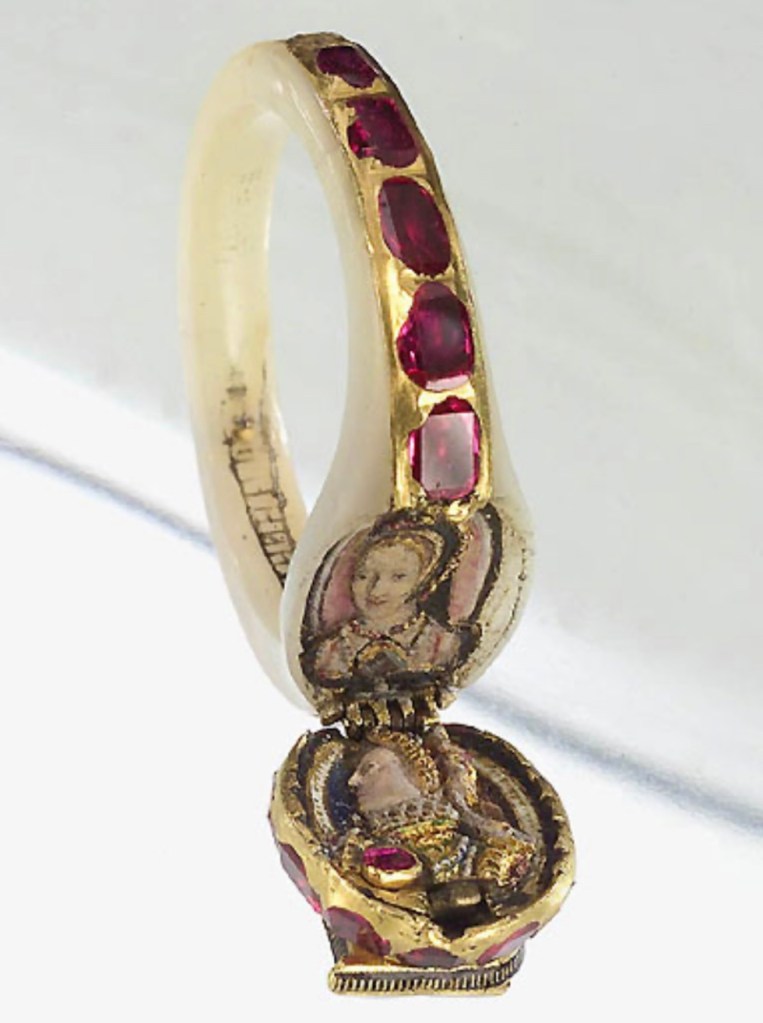
Much of Elizabeth I’s jewellery has long since been lost, dispersed by James I after the Queen’s death, nor is it clear what happened to Carey’s sapphire ring either. Quite likely also lost or given away, no one knows where. The Chequers ring is uniquely special in that it survives, probably bought by the Home family, and descended down the line until acquired by Arthur Lee, First Viscount Lee of Fareham, owner of Chequers country house, which was eventually presented to the nation becoming the country home of the prime minister. The ring remains within the private Chequers collection, and is not on public view.
Jewels. Lost and Found in the Thames. And those that survive historic events to tell their tale.
And it’s on that bejewelled note that I hope you’ve all enjoyed a Happy Christmas; wishing you a peaceful and healthy New Year 2026. Thank you to everyone for reading and supporting my mudlarking blog, and for all the kind emails you’ve sent me this year.
NB Please note that a valid permit is required from the Port of London Authority (PLA) in order to mudlark or detect on the Thames Foreshore.
 A Mudlark's Diary
What a fine and beautiful piece of jewelry! It fills my heart with curiosity imagining the lady who wore it, the circumstances in which it was given to her (a birthday, perhaps?), the tea parties or balls in which she would have worn it, and the circumstances in which it ended up at the bottom of the river. A mystery novel might be written using this jewelry as a background!
LikeLiked by 1 person
Thank you for your kind comment regarding my recent Thames jewel find. A joy to spot this after such a long time in the river. I’m looking forward to seeing the original necklace soon in Prague.
LikeLiked by 1 person