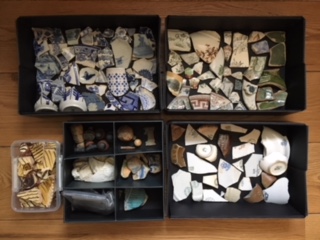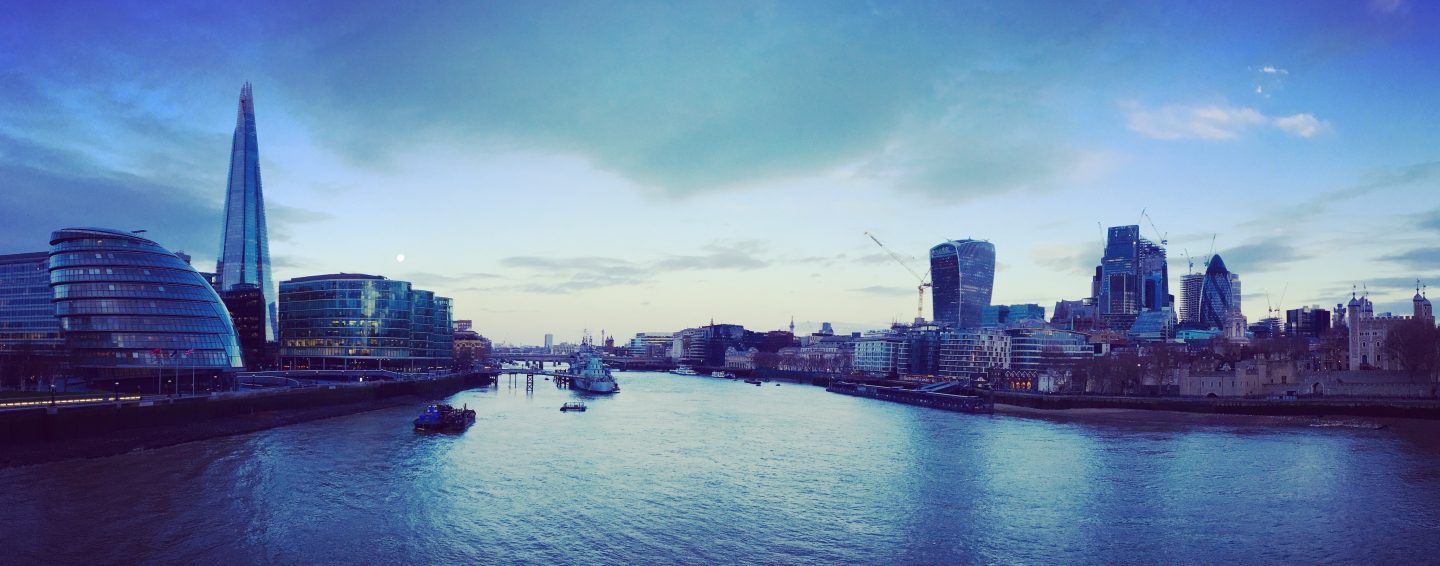
The OED defines the word ‘mudlark’ as ‘a person who scavenges in the river mud for objects of value’. The term was first used during the late 18th century to describe poor Londoners, adults and children, who searched the filthy and dangerous Thames mud at low tide in order to find things to sell. This might be anything from valuable historical artefacts that could be sold to antiquarians or more commonly fragments of copper, lead, nails, rope and pieces of coal. Pilfering from boats and barges also took place when the opportunity presented itself. Life was hard, short and miserable and these people did what they had to do to survive.
Henry Mayhew, journalist, co-founder of the satirical ‘Punch’ magazine, playwright and advocate of social reform, published a series of newspaper articles in the ‘Morning Chronicle’ which in 1851 went on to become the basis of a book series called ‘London Labour and the London Poor.’ He wrote about mudlarks in vivid and graphic terms:
‘They may be seen of all ages, from mere childhood to positive decrepitude, crawling among the barges at the various wharfs along the river; it cannot be said that they are clad in rags, for they are scarcely half covered by the tattered indescribable things that serve them for clothing; their bodies are grimed with the foul soil of the river, and their torn garments stiffened up like boards with dirt of every possible description.’
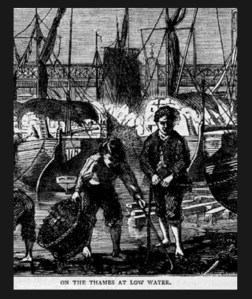
Mayhew didn’t mince his words. Conditions for the early mudlarks were filthy, unhygienic and dangerous. Industrial waste and raw sewage would wash up on the foreshore at low tide together with all sorts of rubbish, and all too frequently the corpses of humans and dead animals. Financially, a mudlark rarely made much of a profit but at least they could keep what they earned from selling their finds. A mudlark was even a recognised occupation until the beginning of the 20th century.
The 19th century was undoubtedly the Golden Age of mudlarking when the Victorians began major infrastructure building projects in London. They rebuilt London Bridge and constructed new embankments and sewage systems to cope with the needs of the huge increase of people living in the capital. Large numbers of important historical finds were made at this time by workmen and labourers working on the river and many of these treasures were sold to collectors only too eager to pay large sums of money for them.
In the 20th century mudlarking increased again in popularity after the Second World War even though London was still recovering from massive bomb damage inflicted by the Luftwaffe and there were (and still are!) ever-present dangers of unexploded mines drifting up onto the foreshore at low tide. Vintage photos from the 1950s show gents in double-breasted suits, their trousers rolled-up to the knee, standing in the river on the City’s north bank searching for finds. In 1949, the archaeologist and writer Ivor Noël Hume began to explore the Thames Foreshore at Southwark and the north bank and wrote in evocative detail about the wonderful experience of treasure hunting in the centre of London. In 1956 he published his sadly now out of print book ‘Treasure In The Thames’ in which he wrote about the atmosphere of the river and the range of glorious items he’d discovered on his mudlarks – Iron Age, Roman and Medieval pottery fragments, old coins, jettons (tokens), 17th Century lead cloth seals, buttons, buckles, pins, clay pipes and Roman tiles. ‘Treasure In The Thames’ was the first book about the archaeology of the Thames in London and continues to remain an important resource for keen mudlarks.
Today mudlarks are very different from the poor scavengers of the past. Thankfully the modern mudlark no longer has to search the Thames mud for a living and can enjoy the simple act of pottering about looking for fragments from past centuries. The modern mudlark is passionate about London’s history and archaeology and many are active participants in a wide range of online resources – Blogs, Instagram, Twitter and Facebook – sharing their films and photos and helping identify finds. They work closely with the Finds Liaison Officer at the Museum of London and the Portable Antiquities Scheme (PAS) where historically important discoveries are recorded. Mudlarks have found, and continue to find, numerous objects that have changed the way historians view the past eg the discovery of rare medieval toys, made from lead or pewter, has helped alter the perceptions of childhood during the Middle Ages. The quality of finds found by mudlarks is often excellent due to the anaerobic nature of Thames mud which is de-oxygenated,, therefore preservative. This means that items often come out of the mud in the same condition as when they were dropped by clumsy fingers all those centuries ago.
The Golden Age of mudlarking has been and gone but there are still special things to be found hiding in that very special Thames mud that links us with the past and the lives of Londoners long since gone.
Mudlarking is our heritage, our history, our city. The inter-tidal zone of the Thames Foreshore is the most unique archaeological site in the world and this literally makes it the people’s archaeology.
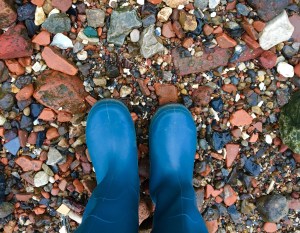
 I first ventured onto the Thames Foreshore at Southbank in the heart of London a few years ago. In those early days you didn’t need a permit to search, there were far fewer restrictions, not quite as many mudlarks, a few detectorists here and there, and you were free to search by eye and take home the bits of pottery and other fragments of the past that you were fortunate to find. I was going through a difficult time professionally, not in the best of health with two frozen shoulders plus work-related stress, and feeling very anxious about my future. I was actually on my way to a difficult meeting but was early so leant against the embankment wall near the Oxo Tower at Gabriel’s Wharf and watched the comings and goings on my beloved Thames.