2024 has been a mixed year with many ups and downs for the mudlarking community, currently in need of large reserves of perseverance and resilience after recent challenging months. However, as we tiptoe into the new year, there’s also been much to celebrate. Many wonderful finds continue to be made by my fellow mudlarks, and our passion for this hobby shared during the past year with members of the public at Hands on History and other exhibitions in historic locations both in and outside London. It’s been a tribute to the bonds that bind us together that, whatever difficulties beset us, friendships forged in the mud of the foreshore continue to sustain many of us through tough times. This is why I love mudlarking.
2025 will see a celebration of mudlarking in the biggest exhibition of its kind ever staged at the London Museum Docklands. ‘London’s Lost Treasures’ opens to the public in April 2025 for a whole year and will be very exciting. I’ll be writing more about this in the new year but here’s one of the promotional articles from the BBC news website to give you a taster of what to expect. Do come! https://www.bbc.co.uk/news/articles/ce9z9lerm90o
And this coming year will also mark ten years from the very moment I first stepped tentatively onto the foreshore and began my mudlarking journey, a very special anniversary for me. It’s been a blast. To celebrate the wonder and privilege that is mudlarking this, my last blog of the year, will be about a bucket list find I made earlier in July.
Summer has been very hit and miss on the weather front in the UK this year. We’ve had so much rain that predicted tides on the Thames have often been higher than expected, and previously lucrative spots have been increasingly inaccessible. On the occasion of my summer bucket list find I decided to go somewhere I hadn’t been for a while, more in hope than expectation, and also out of desperation as I’d missed the earlier train that morning so knew that mudlarking time would be limited. When I eventually got to the river I wasn’t expecting to find very much.
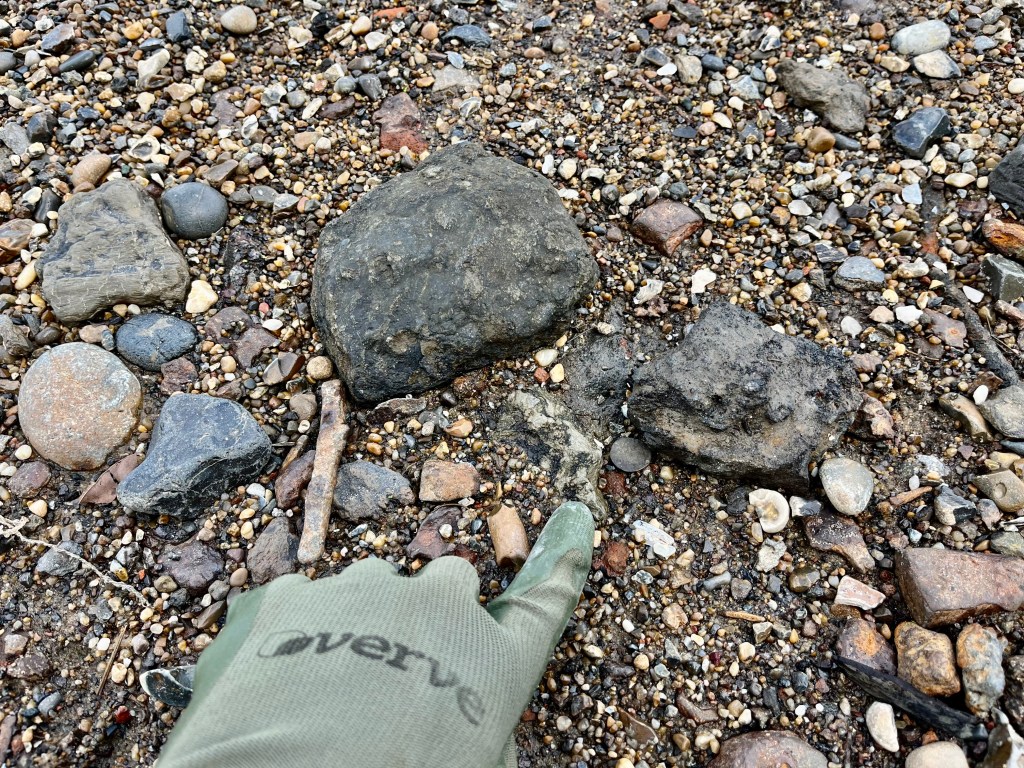
There were a few figures pottering about on the foreshore as I arrived – mudlarking friends Charlie, Tommy, and veteran Society of Mudlarks member Mackie with metal detector in hand, headphones clamped securely to his head – but we were all focused on our own particular areas, shutting out all other distractions. I knelt down at a particularly promising patch and began to scan the mud, rocks and gravel. If you’ve ever wondered what mudlarking on the foreshore actually looks like, the photo below will help give a flavour of just that. It’s about getting your eyes in, looking for particular areas of eroding mud, promising clumps of metal and hoping, just hoping, that it’ll be your lucky day. And so it was for me. If you look at the photo below, can you spot what I saw? (Clue – green gloved finger is pointing at something very interesting.)
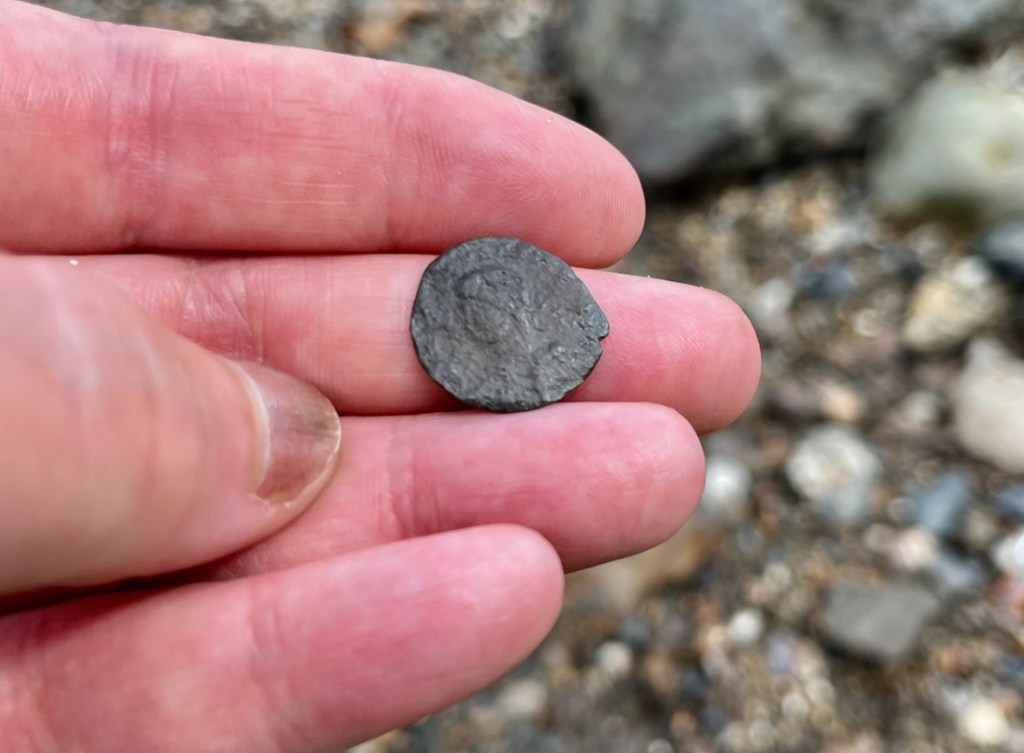
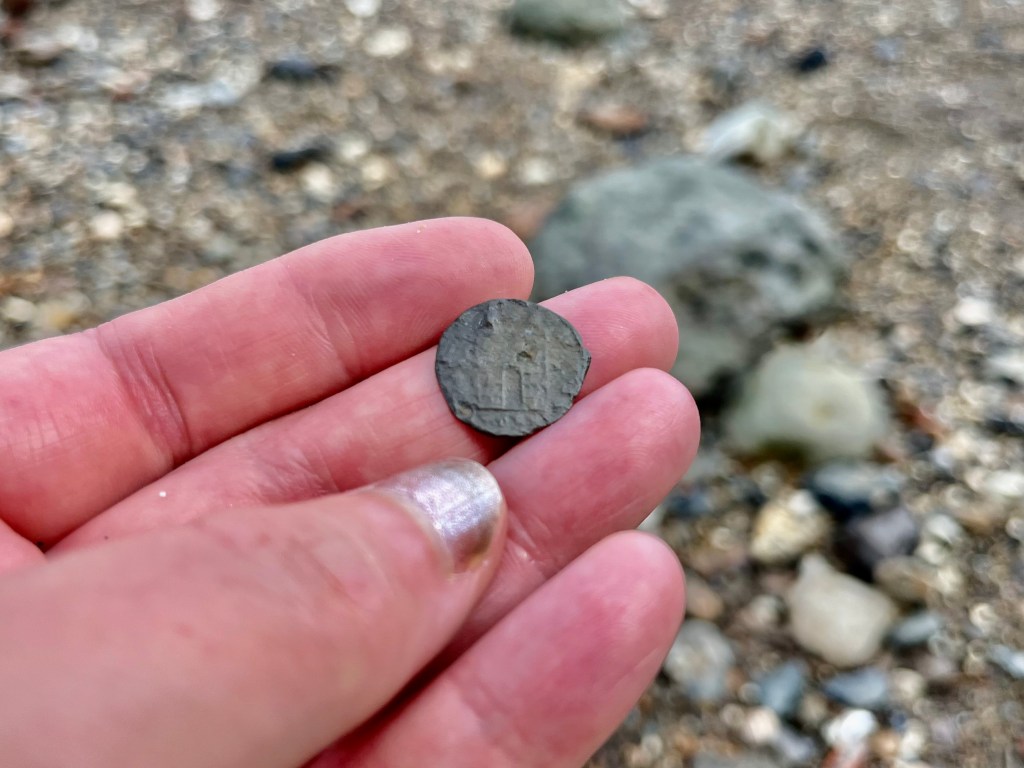
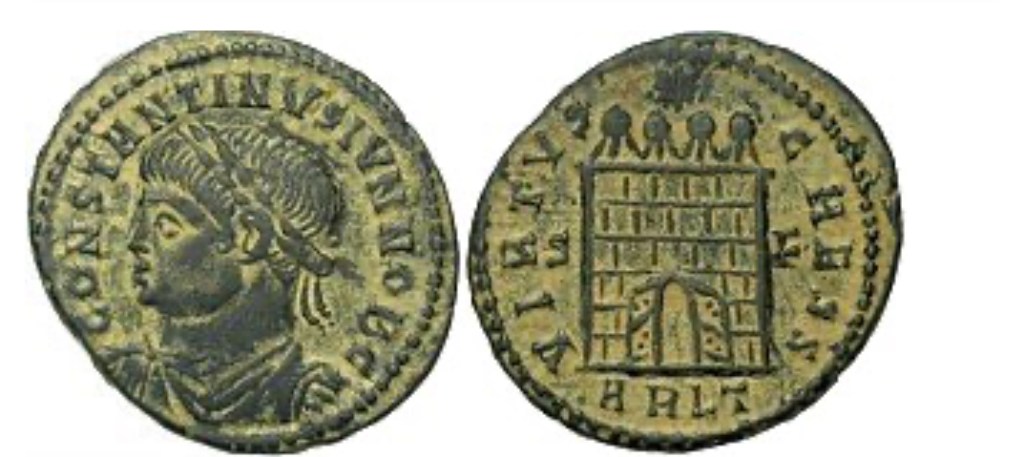
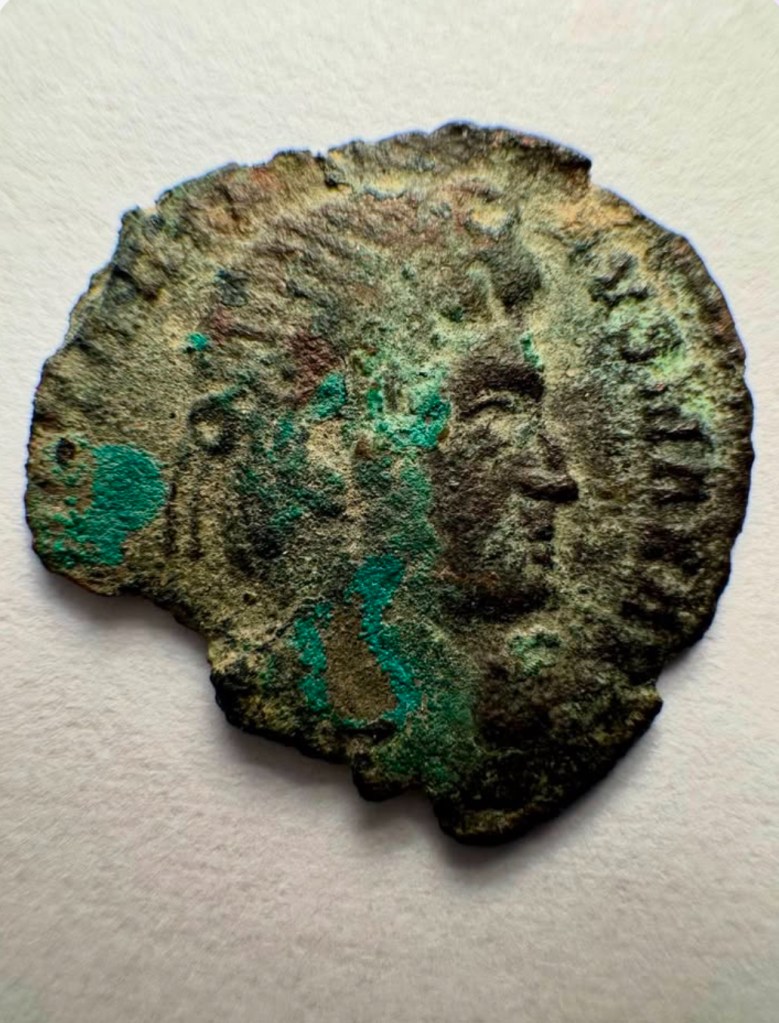
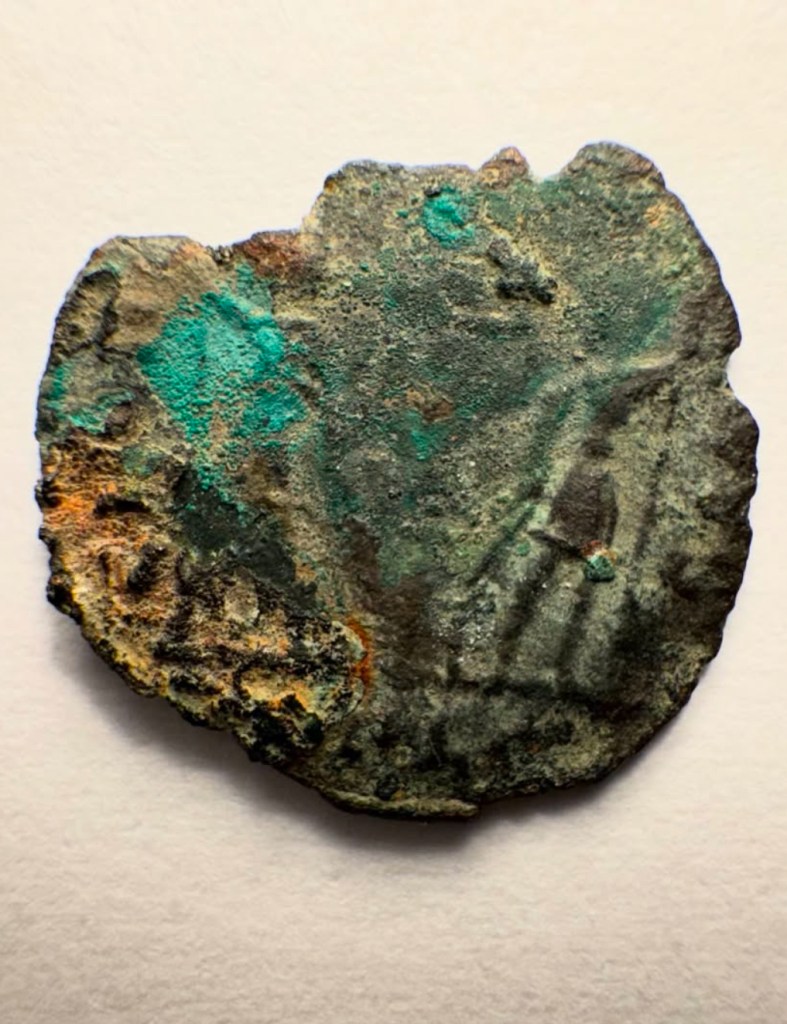
Newly emerged from Thames mud where it had lain hidden for approximately 1,700 years was my first ever Roman coin find. I don’t find many coins, indeed I suffer from coin blindness, so this was particularly special. A Constantine II bronze follis from the Arles (Arelate) mint, though these were also struck in London. Constantine II ruled as Caesar from 337 – 340AD.
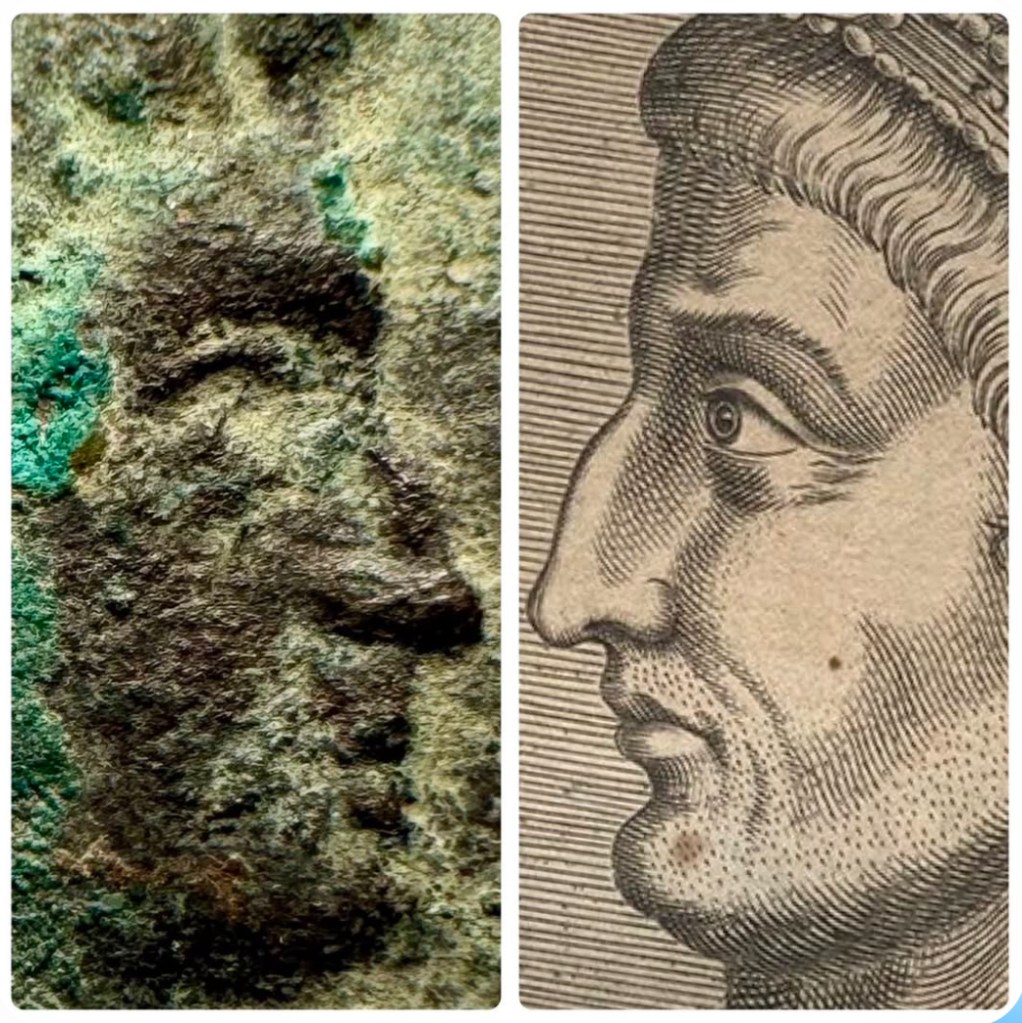
On the obverse (see first photo) the Imperial image is seen facing left. The legend reads CONSTANTINVS IVN (Junior) NOB C, laureate draped with cuirassed bust. On the reverse, the legend VIRTVS CAESS followed by ARLT (Arles) and an image of a camp gate which is open, above which are two turrets, though some coins of this type show four.
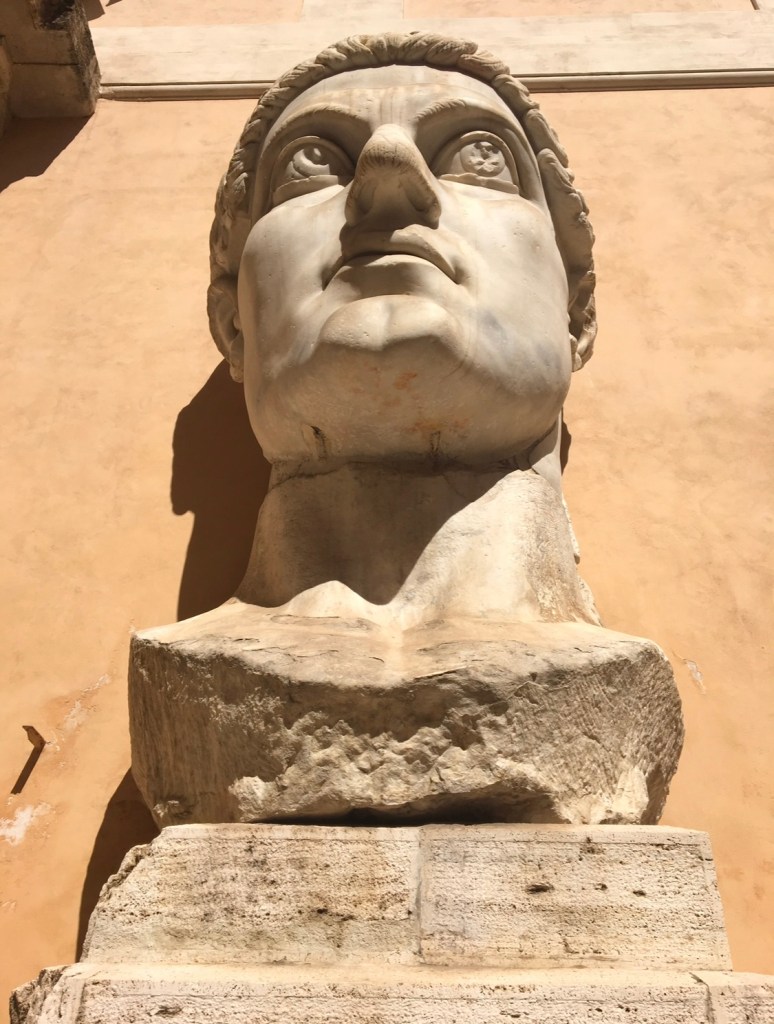
Constantine II is one of those Roman Emperors one could safely say had ‘issues’. Born in Arles, Provence, then a Province of the Roman Empire (the name Provence comes, not surprisingly, from Province, ie a Province of Rome) he was the son of the much more renowned Constantine the Great, famous for converting the Roman Empire to Christianity and the model for the massive stone marble head in the Capitoline Museum, Rome, and grandson of the indomitable Empress Helena. It’s reasonable to speculate that Constantine II struggled to escape his famous father’s shadow.
He was made Caesar before his first birthday in 316AD, a huge burden for an older man, unimaginable for such a young child who was still literally a baby. But such is reality in the dynastic fast lane of the Imperial Roman family where life was complicated, often short, and violent. Constantine II inherited the western part of the Roman Empire – rainy windswept Britain, Gaul and sunny Spain – on the death of his father.
He quarrelled with his brother Constans, invading his brother’s territory, only to be killed for his pains in an ambush in Aquileia. He ruled for a mere three years and achieved little of note.
I often think that Roman Provence gets overlooked in history but it’s richer in ancient Roman monuments and artefacts than anywhere else in the world, even more than in Rome itself. Blessed with vast amphitheatres and triumphal arches, paved roads and magnificent aqueducts in a breathtakingly beautiful landscape. Arles, Nîmes, Marseille (all of which have great Roman museums,) plus Orange and Aix, to name just a few areas which are well worth visiting.
Arles was the favourite city of daddy Constantine the Great because it lay at the heart of the Roman Empire in western Gaul. Geographically a key link between Italy and Spain, with great highways stretching from the Alps to the Pyrenees, as well as routes to the flourishing Mediterranean ports.
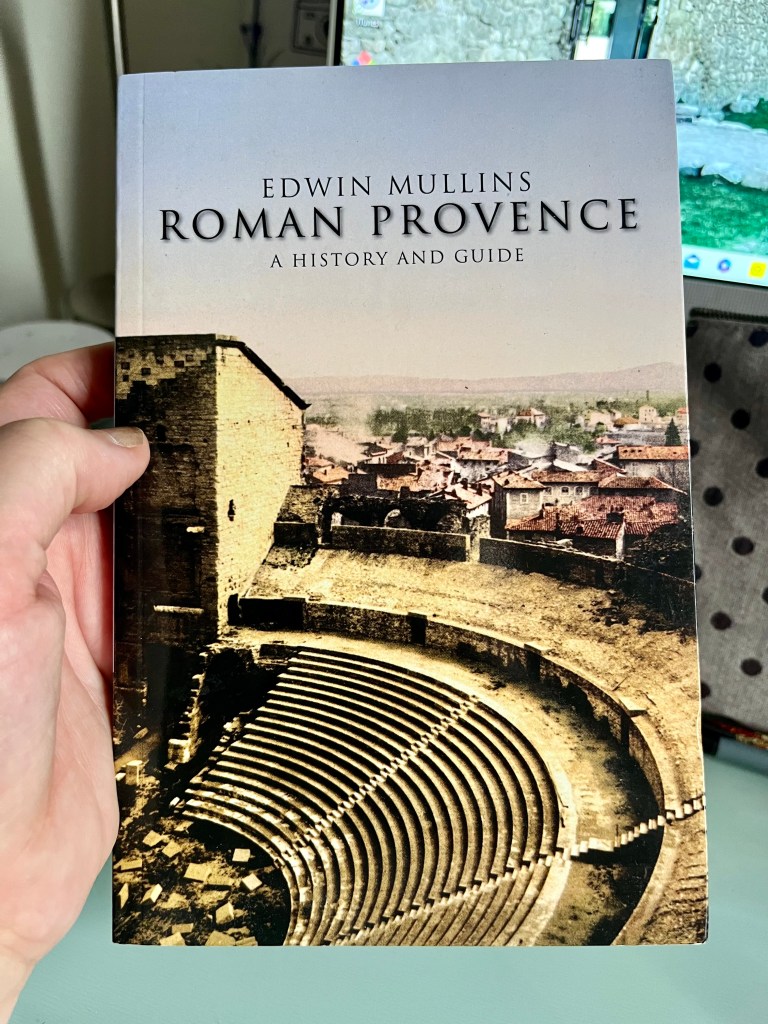
Edwin Mullins’ book on Roman Provence, which I’ve referenced in previous blogs, though a bit dry, is nonetheless an excellent guide to this region and its history, covering six centuries of Roman occupation in this landscape. I’ve just done a quick google to check on the availability of this book and, predictably (please don’t shout at me) it’s currently out of stock, also out of print. Sorry. ‘Tant pis’, as the French would say, though perhaps ‘non est praesto’ in Latin would be more appropriate. But keep a look out for copies, if you can.
Recently the most marvellous thing happened when, courtesy of two fellow mudlarks, my foreshore found Constantine II was reunited with his father Constantine I (the Great) and grandmother Empress Helena (mother of Constantine I.) My fellow mudlarks and friends, Caroline and Guy, shared their Roman coin finds in a social media post and we were finally able to bring this ancient dynasty together. (Please follow them both on Instagram – Caroline is @carolinenunneleymudlark and Guy is @mudlarking.about)
Guy was the lucky finder of a Constantine the Great coin, obverse showing the familiar profile of the Emperor facing right, time and tide having given the coin a faint coppery green patina, slightly worn around the edges and incomplete after millennia immersed in the murky waters of the Thames. A wonderful coin to spot and much envied by other mudlarks.

Then came the formidable Empress Helena. Her image was found on a coin spotted by fellow mudlark and friend Caroline Nunneley, who doesn’t know how thrilled my mother was when I shared this find with her, for reasons that will be clarified anon. (Small clue to keep you all going – Empress Helena is a bit of a legend in our household.)

Flavia Julia Helena (250 to 330AD) is also known as Helena of Constantinople, and in Christianity as St Helena. A true survivor, born from a lower class Greek background thought to be from Drepanum, Bithynia, in what was then north west Asia Minor, though evidence for her precise place of birth is scant. She became the wife of Emperor Constantine Chlorus, mother of another Emperor (Constantine the Great) and grandmother to a third (Constantine II).
Helena is an important figure in Christianity having converted due to the influence of her son Constantine the Great, according to the writer Eusebius, who recorded details of many of her pilgrimages to Palestine and the eastern provinces. In the final years of her life she visited Syria, Palestine and Jerusalem where claims were made that she was given fragments of the True Cross. Her son named various cities after her – Helenopolis in Palestine, Helenopolis in Lydia, and also a province.

She is thought to have been at least 80 when she returned from Palestine, a grand old age for that time when life was short and even mothers of Emperors weren’t safe from plots and treachery.
During excavations and the rebuilding of Jerusalem it’s documented that Helena ordered the destruction of a temple dedicated to Venus built on the supposed site of Christ’s tomb. During the subsequent rebuilding, three crosses were apparently discovered, Helena eagerly taking possession of them, a story recounted in ‘On the Death of Theodosius’ by the writer Ambrose. He wrote about a seriously ill woman who was said to have touched the third of these crosses and mysteriously recovered, thereby convincing Helena that this must indeed be the true cross. Her son Constantine the Great later ordered the building of the Church of the Holy Sepulchre on the site of this discovery.
Helena was also said to be the fortunate owner of assorted fragments of cloth from Christ’s tunic, other pieces of the holy cross, and pieces of rope that had tied Christ to the Cross. Some of her relics can still be seen today in the Basilica of Santa Croce in Jerusalem though others are scattered around Europe in various basilicas, so large was her collection. As a collector of holy artefacts she had no equal.
Helena died in 330AD with her son Constantine the Great by her side. Her sarcophagus is on display in the Vatican Museum though the whereabouts of her actual remains are a bit of a mystery, possibly resting under the main altar in the church of Sant’Elena, Venice, though not everyone is convinced.
I mentioned earlier that my mother was delighted by my sharing details of Caroline’s Roman coin find with her. Empress Helena reminds her of her mother, my grandmother Maria, who shared this same obsession with collecting holy relics, not particularly bothered if their provenance was dodgy. My grandmother was also a proud owner of parts of what she was convinced were the True Cross, the walls of her small home in Poland literally covered in religious icons, rosaries and other sacred objects. She and Empress Helena would have got on like a literal house on fire though, unlike Helena, my grandmother’s collection of holy relics has sadly long since disappeared into the mists of time.
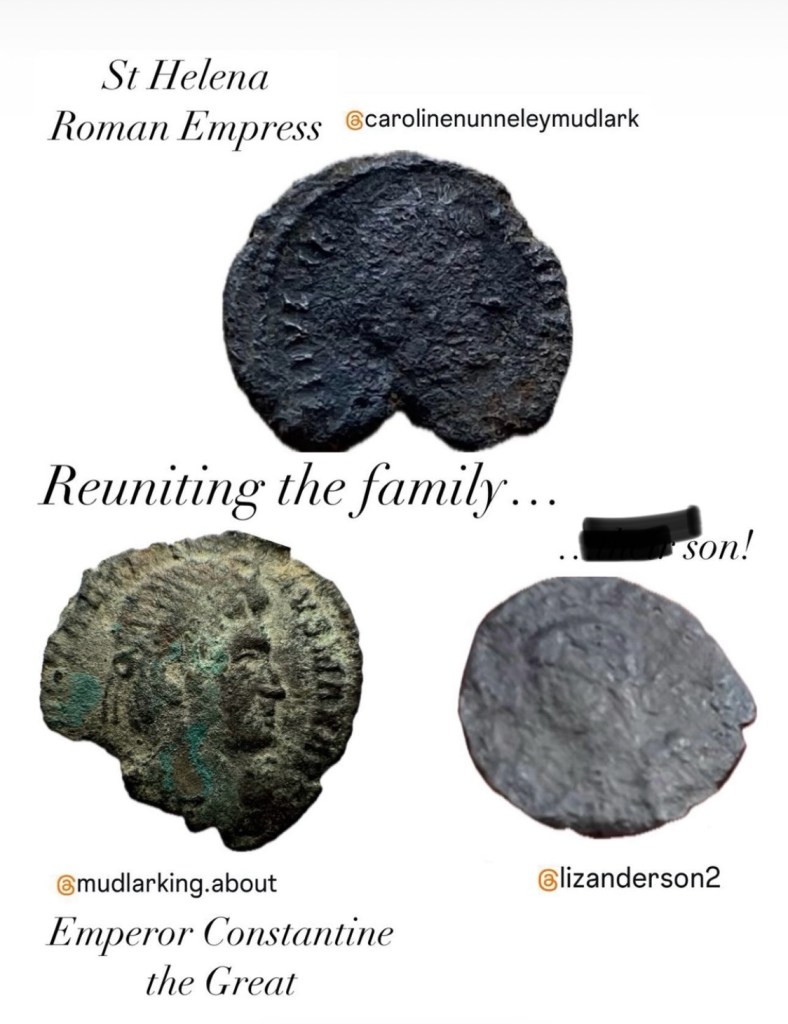
We will never know who owned and subsequently lost any of these three coins. Perhaps a centurion, newly stationed in this damp , grey and miserable outpost of the Roman Empire, probably wishing he was back home in sunny Provence. And who can blame him? As he disembarks from the boat that brought him here, one of these coins slips through his freezing fingers into the murky depths of the river Thames.
Wishing a Happy New Year 2025 to all subscribers and visitors to this mudlarking blog. WordPress informs me that last year approximately 150,000 of you read about my finds from the Thames, and the stories behind them, and this makes me very happy. Thank you for reading.
(NB A valid permit from the Port of London Authority (PLA) is a legal requirement if you wish to mudlark on the Thames Foreshore.)
 A Mudlark's Diary